Cheapest Fuel in Europe: 5 Countries Compared, Updated Daily
# Cheapest Fuel in Europe 2026: Country-by-Country Price Comparison
Spain is the cheapest country for petrol in Western Europe — by a significant margin. Based on data from Fuelconomy's network of 52,000+ stations across France, Spain, Italy, Portugal, and the United Kingdom, the gap between the cheapest and most expensive country for unleaded petrol currently sits at roughly €0.28/L. On a 50L fill-up, every month, that's a difference of over €160/year depending on which side of the border you pump. Knowing where — and when — to fill up across Europe is one of the simplest ways to cut your annual motoring bill.
Key facts for 2026:
- Spain leads as the cheapest for petrol in Western Europe: €1.742/L for Gasolina 95 E5, roughly 15% below the EU average
- France sits 12% above the EU average for petrol at €2.110/L (E10)
- Italy is consistently among the pricier markets: €1.997/L for Benzina
- Portugal occupies middle ground for petrol but diesel is competitive: €2.262/L for Gasóleo Simples
- UK petrol averages around 136p/L (≈€1.62/L) — high taxation keeps forecourt prices elevated despite lower pre-tax costs
- The price spread between the cheapest and most expensive station within a single country can exceed €0.535/L in Spain and €0.355/L in France — meaning location matters as much as which country you're in
- Fuelconomy tracks 6,452 stations in France, 11,190 in Spain, and 20,259 in Italy — updated twice daily

---
How Fuel Prices Are Set Across Europe
The single biggest driver of pump prices in Europe isn't the oil price — it's taxation. Excise duties and VAT typically account for 50 – 65% of what you pay at the forecourt. That's why two neighbouring countries sharing the same crude oil benchmark can differ by €0.30/L or more.
Excise duty is set nationally. France charges around €0.684/L in excise on petrol; Spain charges approximately €0.472/L. The VAT rate then multiplies the total. France's 20% VAT and Spain's 21% are close — yet the excise gap is large enough to make crossing from France into Spain worth planning a fill-up around if you're near the border.
The UK operates outside the EU framework post-Brexit, levying £0.5295/L in fuel duty (frozen through August 2026 under the government's extended cut) plus 20% VAT. The pre-tax cost of petrol in the UK is actually lower than many EU equivalents — it's the tax layer that pushes pump prices up.
Distribution infrastructure matters too. Countries with dense station networks and supermarket forecourt competition — such as Spain and the United Kingdom — tend to have tighter margins and more aggressive pricing at the forecourt level. Italy, with its significant share of autostrada service stations (which routinely charge 10 – 22% above urban prices), sees larger within-country spreads.
---
Petrol Prices by Country: Current Comparison (Live Data)
The table below shows current national average prices across Fuelconomy's coverage area, alongside the EU-wide average for context.
| Country | Main Petrol Grade | Avg Price | Diesel Grade | Avg Price | Stations |
|---|---|---|---|---|---|
| Spain | Gasolina 95 E5 | €1.742/L | Gasóleo A | €1.894/L | 11,190 |
| Italy | Benzina | €1.997/L | Gasolio | €2.260/L | 20,259 |
| Portugal | Gasolina Simples 95 | €2.092/L | Gasóleo Simples | €2.262/L | 2,806 |
| France | E10 | €2.110/L | Gazole | €2.369/L | 6,452 |
| United Kingdom | E10 | ~136p/L (≈€1.62) | B7 | ~148p/L (≈€1.76) | 6,657 |
(Live data — updated twice daily from Fuelconomy's station network)
| Fuel | Min | Avg | Max |
|---|---|---|---|
| Gasolina 95 E5 | €1.464 | €1.742 | €1.999 |
| Gasóleo A | €1.639 | €1.894 | €2.259 |
| Gases Licuados del Petróleo | €0.781 | €1.111 | €1.290 |
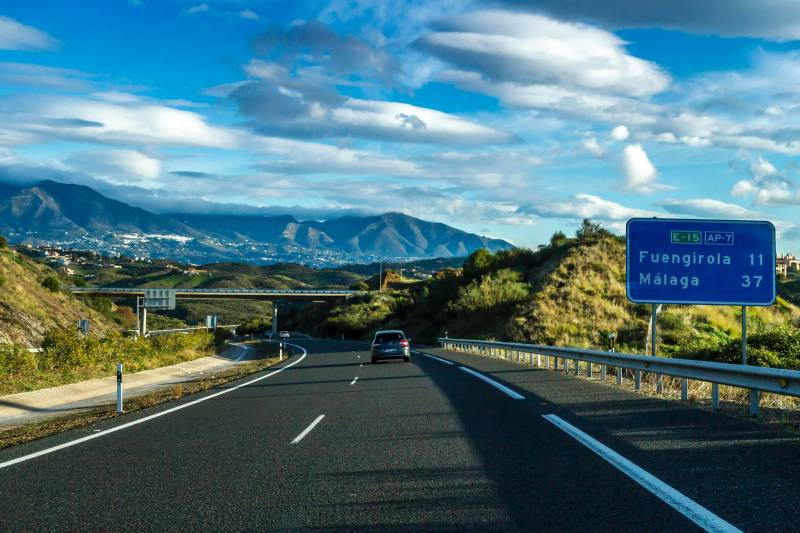
Spain's advantage is structural, not cyclical. Lower excise duties mean even when Brent crude spikes, Spanish pump prices tend to stay below their Western European neighbours. In early March 2026, Gasolina 95 E5 in Spain averaged around €1.49/L — roughly 18% cheaper than equivalent petrol in France and about 11% cheaper than in Italy.
---
France: High Tax, High Prices — But Supermarkets Help
France consistently ranks among the pricier Western European markets for fuel. The combination of €0.684/L excise on petrol and 20% VAT pushes E10 to one of the higher national averages in the EU. French motorists filling up twice a month pay roughly €200 – €250/year more than their Spanish neighbours for an equivalent petrol car.
That said, France has one of the strongest supermarket fuel cultures in Europe. The hypermarket chains — Leclerc, Intermarché, Système U — undercut branded forecourts by €0.08 – €0.15/L and account for over 60% of retail fuel sales. In cities like Paris, Lyon, and Marseille, the difference between the cheapest and most expensive station can exceed €0.355/L — a gap of over €15 on a typical tank.
| Fuel | Min | Avg | Max |
|---|---|---|---|
| E10 | €1.982 | €2.110 | €2.337 |
| Gazole | €2.203 | €2.369 | €2.523 |
| GPLc | €0.899 | €1.063 | €1.211 |
France also offers E85, bioethanol flex-fuel — currently the cheapest fuel per litre in France at roughly half the price of SP98. For drivers with compatible flex-fuel vehicles, the savings can exceed €1,000/year on annual mileage above 20,000 km. However, the real-world range decrease (E85 has lower energy density) means the per-kilometre saving is closer to 30 – 40% rather than 50%.
France's premium grade SP98 — a 98-octane petrol aimed at performance engines — costs noticeably more than E10. For most modern cars, the octane uplift delivers no measurable benefit; the extra spend is rarely justified outside of turbocharged or high-compression engines that specifically require it.
Border tip: Drivers crossing from France into Spain near the Basque Country or Catalonia routinely save €0.20 – €0.25/L by fuelling on the Spanish side of the border. On a 60L tank, that's €12 – €15 per fill-up. The saving justifies a minor detour at or near the border.
---
Spain: The Cheapest Petrol in Western Europe
Spain is the standout low-price market among Fuelconomy's five coverage countries — a position it has held consistently over the past five years. The primary reason is fiscal: Spain's petrol excise duty runs roughly 30% lower than France's and nearly 20% lower than Portugal's.
The price spread within Spain is also notable. In Madrid and Barcelona, the difference between the cheapest station and the most expensive exceeds €0.290/L — in a city this size, that gap is easy to close with a two-minute detour. Fuelconomy's live map for Madrid and Barcelona shows real-time prices from hundreds of stations, updated every 12 hours.
| Fuel | Min | Avg | Max |
|---|---|---|---|
| Gasolina 95 E5 | €1.464 | €1.742 | €1.999 |
| Gasóleo A | €1.639 | €1.894 | €2.259 |
| Gases Licuados del Petróleo | €0.781 | €1.111 | €1.290 |
Gasóleo A — Spain's standard diesel — is similarly competitive. Spain's diesel averages €1.894/L, among the lowest in Western Europe. For long-distance drivers and commercial operators, the combination of cheap diesel, an extensive motorway network, and relatively low tolls (compared to France or Italy) makes Spain a genuinely cost-effective country to drive in.
Gasóleo Premium, Spain's premium diesel grade, carries a surcharge of roughly €0.06 – €0.10/L over standard diesel. Independent tests suggest it delivers measurable DPF and injector protection benefits in older diesel engines doing high mileage — but for most modern Euro 6 diesels, the standard grade is adequate.
---
Italy: Premium Market with Wide Internal Spreads
Italy sits at the expensive end of the Fuelconomy coverage area. Italian fuel taxes are among the highest in Europe — a legacy of excise duties historically stacked up over decades to fund everything from the Abyssinia war to earthquake reconstruction. Today, approximately 64% of the price of Benzina at the pump is tax.
The headline price masks a brutal within-country spread. Autostrada service stations — operated by licensed concessionaires under the motorway operator — charge a legally permitted premium of 15 – 22% over the urban average. A driver filling up on the A1 between Rome and Milan without checking prices first can easily pay €2.052/L — well above the national average of €1.997/L.
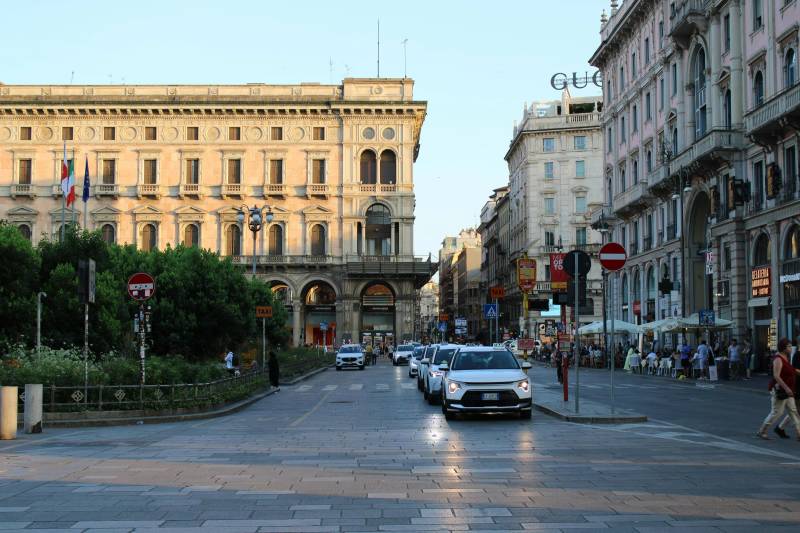
The strategy is simple: never fill up on the Italian autostrada unless you're below a quarter tank. Exit at the nearest junction, refuel at an urban station, and return to the motorway. On a 50L tank, the saving is typically €8 – €15 per fill-up. Fuelconomy tracks over 20,259 Italian stations — use the city pages for Rome, Milan, Naples, and Turin to find the cheapest forecourt within a few kilometres of any autostrada exit.
| Fuel | Min | Avg | Max |
|---|---|---|---|
| Benzina | €1.658 | €1.997 | €2.052 |
| Gasolio | €1.769 | €2.260 | €2.419 |
| GPL | €0.599 | €0.774 | €0.874 |
Italy also has a significant Metano (CNG) network — one of the most developed in Europe — with prices that make per-kilometre costs for compatible vehicles substantially lower than petrol or diesel. For drivers with bi-fuel CNG/petrol cars, Italy is actually a cost-efficient country to drive in.
---
Portugal: Competitive Diesel, Pricier Petrol
Portugal occupies a middle position. Gasóleo Simples — standard diesel — is reasonably competitive against the European average, particularly outside Lisbon and Porto, where independent stations keep margins tight. Gasolina Simples 95 — the main petrol grade — tends to run above Spain's equivalent by around €0.20 – €0.25/L, reflecting higher excise duties and Portugal's VAT rate of 23%.
The Algarve and Alentejo regions typically show the highest prices within Portugal — fewer competing stations and higher distribution costs push forecourt prices above the national average by €0.05 – €0.10/L. Drivers heading to the Algarve from Seville or the Spanish side of the border are better served filling up before crossing.
| Fuel | Min | Avg | Max |
|---|---|---|---|
| Gasolina Simples 95 | €1.894 | €2.092 | €2.224 |
| Gasóleo Simples | €1.999 | €2.262 | €2.404 |
| GPL Auto | €0.898 | €1.021 | €1.135 |
Portugal's premium grades — Gasóleo Especial and Gasolina Especial 98 — carry significant premiums over the simple grades. For the vast majority of passenger cars in everyday use, the simples grades are perfectly adequate. The premium grades are marketed on detergency and injector protection claims that the standard EN 590 specification already largely covers.
---
UK: High Tax, Falling Crude — Watching the Duty Freeze
The United Kingdom operates on pence per litre rather than euros, which distorts direct comparisons. Converting at current exchange rates (approximately £0.84 = €1.00), UK petrol averages around €1.62/L — placing it above the EU average and broadly comparable to the upper tier of continental pricing.
E10 is the standard petrol grade, introduced in September 2021. E5 (super unleaded) adds 15 – 20p/L premium and is required for older vehicles unable to run on E10. The UK's 10-percentage-point ethanol difference between grades is the largest in Fuelconomy's coverage area — relevant for owners of classic cars or older models that appear on the E10 incompatibility register.
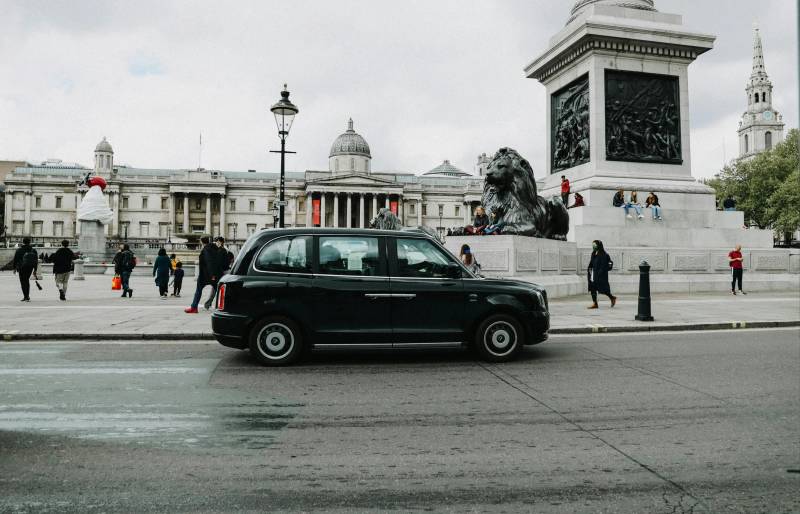
The UK's fuel duty freeze — held at 52.95p/L since March 2022 — is due to step up from September 2026. The government announced incremental duty increases through March 2027, taking duty back toward pre-2022 levels. Drivers should expect UK pump prices to rise by 3 – 5p/L in autumn 2026 regardless of crude oil movements, as duty increases layer on top of market pricing.
Motorway service stations in the UK can charge 15 – 25p/L above the urban average — a gap confirmed by Competition and Markets Authority investigations. The new Fuel Finder Scheme (mandatory from February 2026) requires all forecourts to report prices within 30 minutes to third-party apps. This is already tightening motorway premiums as price transparency increases.
| Fuel | Min | Avg | Max |
|---|---|---|---|
| E10 | £1.540 | £1.727 | £1.850 |
| B7 | £1.760 | £1.989 | £2.040 |
---
The EU-Wide Picture: East vs. West
Fuelconomy's coverage focuses on Western Europe, but it's worth understanding the broader context. Within the EU-27, the price spread for petrol runs from Bulgaria at approximately €1.23/L at the low end to the Netherlands at over €2.07/L at the peak — a gap of €0.84/L, or €42 on a 50L tank. Among Fuelconomy's five countries, Spain sits closest to the EU average (and below it), while France and the United Kingdom rank in the upper tier.
The broad pattern is consistent: Eastern European countries with lower excise duties offer significantly cheaper fuel. Western European countries prioritising carbon and transport taxation push prices higher. This isn't expected to change materially through 2026 — EU energy policy is if anything trending toward higher taxation on fossil fuels in alignment with the 2030 emissions targets.
---
Where to Save Most: Practical Strategies by Country
Spain: Use the Fuelconomy live map to identify supermarket stations (Repsol, BP, Cepsa branded stations tend to run 3 – 5% above independents). In cities like Madrid, Valencia, and Seville, the cheapest station is rarely the one on the main road.
France: Fill up at hypermarket petrol stations (typically on the edge of town near commercial zones) rather than motorway Aire de service. For Paris drivers, the cheapest petrol in the metropolitan area is consistently found in the inner banlieue rather than central arrondissements. Use Fuelconomy to compare prices across the 6,452 tracked stations before your next fill-up.
Italy: Never fill up on the autostrada. Exit, check Fuelconomy for the nearest urban station, refuel, re-enter. In Rome, the spread between cheapest and most expensive station is €0.300/L — a difference that adds up fast.
Portugal: Fill up in Lisbon or Porto before heading south or east. Fuel is consistently cheaper in the two main cities than anywhere in the Alentejo or Algarve.
UK: Supermarkets (Tesco, Asda, Morrisons, Sainsbury's) consistently undercut the national average by 3 – 8p/L. The new Fuel Finder Scheme makes independent comparison easier than ever — use Fuelconomy's UK coverage alongside it to identify the cheapest forecourts near your route.
---
FAQ
Which country has the cheapest petrol in Europe in 2026? Among the major Western European markets, Spain has the cheapest petrol, averaging €1.742/L for Gasolina 95 E5. Across the EU-27 broadly, Bulgaria is the cheapest member state at around €1.23/L, but it falls outside Fuelconomy's coverage area. Among the five Fuelconomy countries, Spain is consistently the low-price leader.
Is diesel cheaper than petrol in Europe right now? In most of Fuelconomy's coverage countries, diesel and petrol prices are broadly similar — within €0.05/L of each other. France currently sees Gazole slightly cheaper than E10, while in Italy, Gasolio tends to run slightly above Benzina. In the United Kingdom, B7 diesel averages 10 – 12p/L more than E10 petrol — a wider gap than on the continent, linked to elevated UK diesel demand from the commercial fleet.
Why is fuel so much cheaper in Spain than France? The main reason is excise duty. Spain applies approximately €0.472/L excise on petrol; France applies €0.684/L — a pre-VAT gap of over €0.21/L. Once VAT is applied (Spain 21%, France 20%), that differential grows to around €0.25/L. Spain's lower production and distribution costs relative to France add a further small margin. The net result is that Spanish drivers pay roughly 15 – 18% less for petrol than their French counterparts.
How much can I save by filling up in a cheaper country when driving across Europe? On a cross-border trip from France to Spain, filling a 60L tank on the Spanish side of the border saves approximately €13 – €15 at current prices. Over a summer driving holiday covering 3,000 km and multiple fill-ups, the routing choices around refuelling can reduce fuel costs by €50 – €80. Planning fill-up stops using Fuelconomy's live comparison map — which covers all five countries on a single interface — is the most efficient way to optimise this.
Are motorway fuel prices always higher in Europe? Yes, in all five Fuelconomy countries, motorway or autostrada fuel consistently costs more than equivalent urban pricing. The premium varies: around 5 – 10% in Spain, 10 – 18% in France, 15 – 22% in Italy, and 15 – 25% in the United Kingdom. Portugal's motorway premium is among the more moderate in Europe, typically 8 – 12%. Exiting the motorway to refuel is almost always worth it if you're within 5 km of a populated junction.
What is the cheapest fuel type in France? E85 bioethanol is dramatically cheaper per litre than petrol grades in France — typically 40 – 50% less. However, compatible flex-fuel vehicles (FFV) are required, and the lower energy density of E85 reduces range by 25 – 30% per tank compared to petrol. For FFV owners doing high annual mileage, E85 is nonetheless the most cost-effective option in France, often saving €800 – €1,200/year over SP95 or SP98.
How often do fuel prices change in Europe? At the country level, European fuel prices are driven primarily by weekly crude oil benchmark movements and monthly adjustments to wholesale contracts. At the station level, prices at independent and supermarket forecourts can move daily. Branded stations tend to adjust less frequently. Fuelconomy's database updates twice daily from 6,452 French stations, 11,190 Spanish stations, and 20,259 Italian stations — the live widgets below reflect same-day pricing.
---
Conclusion
Spain is the clear winner for Western European drivers seeking cheap petrol, with prices running 15 – 18% below France and roughly 11% below Italy. The UK sits in an unusual position — pre-tax costs are moderate, but heavy duty and VAT stack up a pump price that rivals France's. Italy's wide autostrada premiums make within-country strategy as important as cross-border comparisons. For any driver planning a European road trip, comparing live prices across all five countries before each fill-up is worth building into the routine — Fuelconomy's live map covers all 52,000+ stations on a single page. Check the cheapest stations near your route before your next fill-up.
---
Sources:
- European Commission Weekly Oil Bulletin
- fuel-prices.eu EU Weekly Fuel Price Report (March 2, 2026)
- fuel-prices.eu France Country Page (March 2, 2026)
- Heycar UK Fuel Prices (March 2026)
- UK Government: Fuel Duty Rates 2026 to 2027
- UK Government: Weekly Road Fuel Prices
- IRU World Road Transport Organisation: Fuel Prices
---