E10 vs E5 vs SP98 vs E85: Which Fuel Do You Need?
The price gap between the cheapest and most expensive petrol grade at the same station can top €0.30/L – yet most drivers have no idea whether they're paying for a genuine performance benefit or simply overfilling the oil industry's margin. Based on Fuelconomy's live dataset covering 6,452 French stations, 20,259 Italian stations, and thousands more across Spain, Portugal and the United Kingdom, the answer depends on exactly three things: your car's age, its engine design, and how many kilometres you drive each year. This guide breaks down the real differences between E10, E5, SP98 and E85 – with live pricing, compatibility rules, and the savings maths that actually matters.
Key Facts
- E10 contains 10% bioethanol and is now the standard unleaded grade in France, Germany and the United Kingdom, compatible with roughly 95% of petrol cars on the road
- E5 contains 5% bioethanol and is sold as "super unleaded" or "SP95" in most European markets – it remains essential for pre-2002 vehicles and certain classic cars
- SP98 has a 98 RON octane rating with up to 5% ethanol – it costs roughly 8 – 12% more per litre than E10 but offers no measurable benefit in engines designed for 95 RON
- E85 contains 60 – 85% bioethanol and is the cheapest pump fuel in France at roughly half the per-litre cost of E10, but requires a flex-fuel vehicle or an approved conversion kit
- Fuel economy drops 1 – 2% when switching from E5 to E10 due to ethanol's lower energy density – about 5 – 10 fewer miles per tank on a 55L fill-up
- E85's energy penalty is much steeper: expect 20 – 25% higher fuel consumption, though the per-litre price advantage still delivers net savings of roughly €500 – €700/year for the average French driver
- Over 4,000 French stations now offer E85, covering 42% of the national forecourt network – nearly 93% of French residents live within 10 km of an E85 pump
What the "E" Numbers Actually Mean
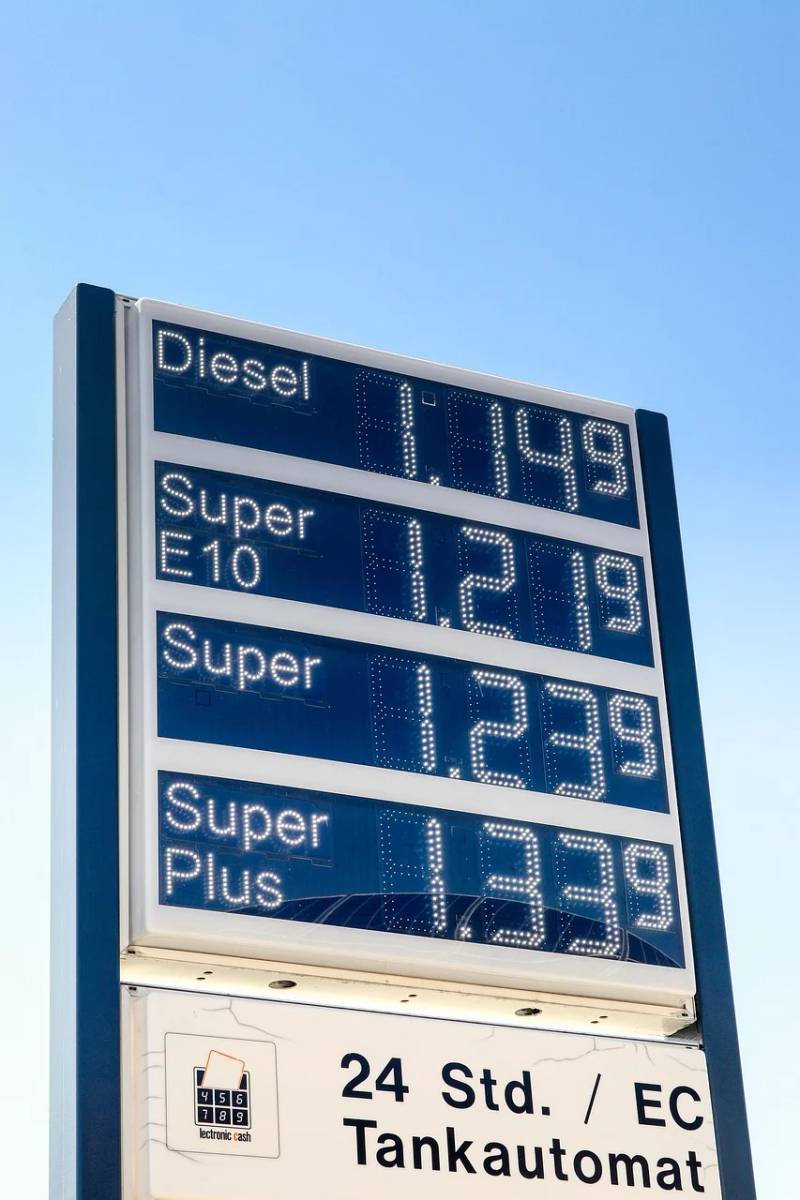
The letter-number code on the pump tells you one thing: the maximum percentage of ethanol blended into the petrol. E5 means up to 5% ethanol, E10 means up to 10%, and E85 sits between 60% and 85% depending on the season (lower in winter to avoid cold-start problems). The number is not an octane rating – a common mistake. You can buy 95 RON E10 and 98 RON E10 side by side at some Spanish stations, where Gasolina 95 E5 and Gasolina 98 E5 coexist alongside newer E10 blends like Gasolina 95 E10.
Ethanol has a higher octane rating than pure petrol, which is why it improves knock resistance in high-compression engines. But it also carries roughly 30% less energy per litre than petrol. That trade-off – higher octane, lower energy – is the single most important fact in this entire guide. It explains why E10 gives slightly worse mileage than E5, why E85 needs flex-fuel engineering to work at all, and why paying extra for SP98 only makes sense in specific engines.
How Fuelconomy Data Works
Fuelconomy aggregates fuel prices from official government feeds and regulated station reporting systems across France, Spain, Italy, Portugal, Germany and the United Kingdom, then standardises them into a single live database. All station counts, average prices and price spreads in this article are based on the Fuelconomy dataset as of March 2026. Inline prices update automatically as new data arrives.
E10 – The New Standard Across Europe
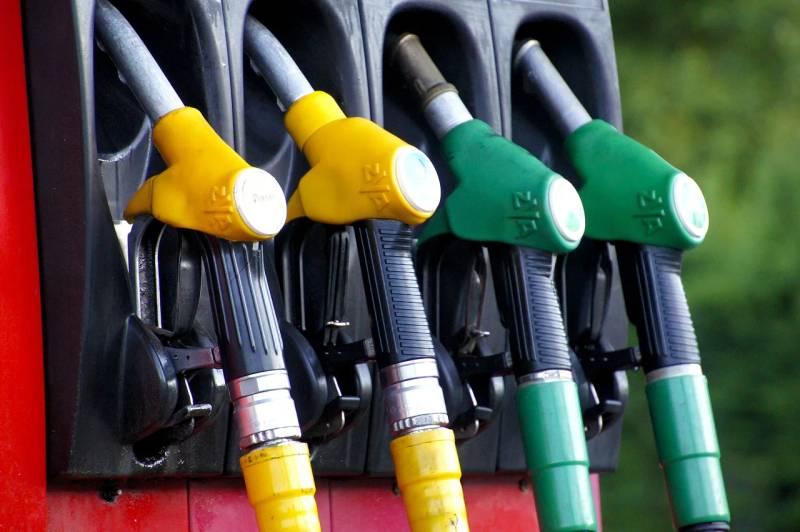
E10 is the default unleaded grade in France (sold as E10), Germany (sold as Super E10), and the United Kingdom (sold as E10). If you've filled up at any major forecourt since 2021, you've almost certainly already used it.
Compatibility
Every petrol car sold in Europe since 2011 is designed and tested for E10. Most vehicles built after 2000 handle it without issues. The risk group is small but real: certain pre-2002 models with fuel system seals, hoses and gaskets not rated for higher ethanol exposure. In the UK, the government's online compatibility checker covers every make and model. If your car has a carburettor or is a genuine classic, stick with E5.
Fuel economy impact
Government and industry testing consistently shows a 1 – 2% reduction in fuel economy when switching from E5 to E10. On a practical level, that's about 5 – 10 fewer miles per 55-litre tank – noticeable in a spreadsheet, barely noticeable on the road. Since E10 is typically cheaper per litre than E5, most drivers break even or come out slightly ahead on total fuel spend.
Current prices
In the United Kingdom, E10 averages around £1.727/L, while premium E5 sits at £1.906/L – a spread that typically runs 10 – 15p per litre. In France, E10 averages €2.110/L. (Live data)
| Fuel | Min | Avg | Max |
|---|---|---|---|
| E10 | €1.982 | €2.110 | €2.337 |
| Gazole | €2.203 | €2.369 | €2.523 |
| GPLc | €0.899 | €1.063 | €1.211 |
E5 – Still Essential for Some Drivers
E5 is the older standard: up to 5% ethanol blended with 95% conventional petrol. In France, it's sold as SP95. In the United Kingdom, it's marketed as E5 or "super unleaded" and now commands a premium. In Spain, Gasolina 95 E5 remains the dominant standard grade, while Italy sells its equivalent as Benzina.
Who still needs E5?
Three groups should stick with E5 as their primary fuel. Classic and vintage car owners – any vehicle with carburettor-era fuel system components. Certain models built between 2000 and 2011 – check your manual or filler cap. And motorcycles or mopeds from older ranges where manufacturers haven't confirmed E10 compatibility. For everyone else, E5 is a preference rather than a requirement.
The fuel stability argument
E5 absorbs less atmospheric moisture than E10 because ethanol is hygroscopic – it attracts water. For vehicles that sit idle for weeks or months (seasonal cars, boats, stored motorcycles), E5 reduces the risk of phase separation, where water and ethanol pool at the bottom of the tank and corrode metal components. If your vehicle spends more time parked than driven, E5 is worth the premium.

SP98 – Premium Octane, Premium Price
SP98 in France, Gasolina 98 E5 in Spain, Benzina Speciale and various 98-octane branded fuels in Italy – this is the high-octane grade, and it's where the oil industry makes its fattest retail margin.
When SP98 actually helps
A higher octane rating lets the engine's ECU advance ignition timing, which can extract marginally more power and fractionally better efficiency – but only if the engine is engineered to take advantage of it. Turbocharged performance engines with high compression ratios (think hot hatchbacks, sports cars, and anything with a "sport" or "GTI" badge) can see a genuine, if modest, improvement. The engine management system detects the better knock resistance and adjusts accordingly.
When it's wasted money
If your owner's manual specifies 95 RON as the minimum requirement, filling with 98 RON gives you precisely nothing. The ECU won't advance timing beyond its design parameters. You're simply paying 8 – 12% more for identical performance. Across Fuelconomy's tracked markets, SP98 in France averages €2.248/L, while E10 sits at €2.110/L. On a 50L tank, that gap adds up to roughly €4 – €6 per fill-up – or €100 – €150/year for a driver topping up twice a month. (Live data)
Rule of thumb: Check your fuel filler cap or owner's manual. If it says "95 RON minimum," save your money and use E10. If it says "98 RON recommended" or "super unleaded only," then SP98 is the correct choice for your engine.
E85 – Half the Price, Double the Complexity
E85 is France's best-kept secret at the pump – and simultaneously its most misunderstood fuel. At roughly €0.899/L versus €2.110/L for E10, the per-litre savings are dramatic. But the maths is more nuanced than a headline number. (Live data)
The savings calculation
E85 delivers roughly 25% fewer kilometres per litre than standard petrol because ethanol contains less energy. So while a driver saves more than half on the per-litre price, actual fuel spend savings – after accounting for the higher consumption – typically land in the range of €500 – €700/year for 13,000 km driven. High-mileage drivers covering 20,000 km can save over €1,000 annually, based on recent pricing data and the typical consumption penalty.
Compatibility – the hard limit
E85 is not a drop-in replacement for standard petrol. You need either a factory flex-fuel vehicle (models from Ford, Dacia, Jaguar Land Rover and others are available in the French market) or an approved conversion kit (homologated "boîtier E85"), which costs €400 – €1,000 installed. Putting E85 in a standard petrol car will cause immediate running problems – erratic idle, misfires, check engine lights – and can damage fuel system components over time.
Availability
France leads Europe on E85 infrastructure. Over 4,000 stations now sell it, covering 42% of French forecourts. Nearly 93% of French residents live within 10 km of an E85 pump. In other Fuelconomy markets – Spain, Italy, Portugal and the United Kingdom – E85 availability is either extremely limited or effectively non-existent at the pump.
Price Comparison Across Fuelconomy Markets
The table below shows how petrol grades compare across the countries Fuelconomy tracks. Note that not every grade is available in every country – names and ethanol content vary by market.
| Country | Standard Grade | Avg Price | Premium / SP98 | Avg Price | Stations |
|---|---|---|---|---|---|
| France | E10 | €2.110/L | SP98 | €2.248/L | 6,452 |
| Spain | Gasolina 95 E5 | €1.742/L | Gasolina 98 E5 | €1.929/L | 11,190 |
| Italy | Benzina | €1.997/L | Benzina Speciale | €2.237/L | 20,259 |
| United Kingdom | E10 | £1.727/L | E5 | £1.906/L | 6,657 |
| Portugal | Gasolina Simples 95 | €2.092/L | Gasolina Especial 98 | €2.337/L | 2,806 |
(Live data – updated automatically from the Fuelconomy database)
| Fuel | Min | Avg | Max |
|---|---|---|---|
| E10 | £1.540 | £1.727 | £1.850 |
| B7 | £1.760 | £1.989 | £2.040 |
The Real Cost Over a Year
Raw per-litre prices don't tell the full story. What matters is how much you actually spend on fuel over 12 months. Here's the maths for a driver covering 15,000 km/year in a car averaging 7L/100km (roughly 1,050L of fuel per year):
Scenario: French driver choosing between fuel grades
| Fuel Grade | Approx. Price/L | Consumption Adj. | Litres/Year | Est. Annual Cost |
|---|---|---|---|---|
| E10 | €2.110 | Baseline (7.0L/100km) | 1,050L | Use widget below |
| SP95 | €2.189 | ~Same | 1,050L | Use widget below |
| SP98 | €2.248 | ~Same (95 RON engine) | 1,050L | Use widget below |
| E85 | €0.899 | +25% (8.75L/100km) | 1,313L | Use widget below |
For the average French driver, switching from SP98 to E10 saves roughly €100 – €150/year with no performance downside (assuming a 95 RON engine). Switching from E10 to E85 in a compatible vehicle saves €500 – €700/year even after the consumption penalty. Use Fuelconomy's live price map to compare stations in your area before filling up – the difference between the cheapest and priciest station in the same city can add another €100 – €200/year to your savings.
| Fuel | Min | Avg | Max |
|---|---|---|---|
| Gasolina 95 E5 | €1.464 | €1.742 | €1.999 |
| Gasóleo A | €1.639 | €1.894 | €2.259 |
| Gases Licuados del Petróleo | €0.781 | €1.111 | €1.290 |
How Labels Differ Across Europe
One of the biggest sources of confusion is that the same fuel goes by completely different names depending on where you fill up. Here's a quick decoder for the Fuelconomy markets:
Standard unleaded (95 RON, E5 or E10):
- France: E10 (10% ethanol) or SP95 (5% ethanol)
- Spain: Gasolina 95 E5
- Italy: Benzina
- Portugal: Gasolina Simples 95
- United Kingdom: E10
- Germany: Super E10
Premium unleaded (98 RON or E5 "super"):
- France: SP98
- Spain: Gasolina 98 E5
- Italy: Benzina Speciale
- Portugal: Gasolina Especial 98
- United Kingdom: E5 ("super unleaded")
- Germany: Super E5
High-ethanol (E85):
- France: E85 – widely available at 4,000+ stations
- Spain: Limited – some stations carry Gasolina 95 E85
- Other Fuelconomy markets: Minimal or no availability
Cross-border tip: Planning a road trip across multiple countries? Fuelconomy lets you compare fuel costs across all markets on a single page. Check live prices before you cross the border – the standard grade is almost always the right choice unless your manual says otherwise.

Engine Compatibility Quick Reference
| Your vehicle | E10 | E5 / SP95 | SP98 | E85 |
|---|---|---|---|---|
| Built after 2011, any petrol engine | ✅ Use it | ✅ Fine | ✅ Fine (but likely unnecessary) | ❌ Only with flex-fuel or conversion kit |
| Built 2000 – 2011 | ✅ Most models | ✅ Safe choice | ✅ Fine | ❌ No |
| Built before 2000 / classic cars | ⚠️ Check compatibility | ✅ Recommended | ✅ Best option | ❌ No |
| Flex-fuel / E85 converted | ✅ Yes | ✅ Yes | ✅ Yes | ✅ Designed for it |
| Motorcycles / mopeds | ⚠️ Check with manufacturer | ✅ Recommended | ✅ Fine | ❌ No |
Ethanol, Octane and Performance – Cutting Through the Myths
Myth 1: "Higher octane means more power in any engine." False. Higher octane means better resistance to knock (uncontrolled pre-ignition). Only engines with high compression ratios or turbocharging are designed to exploit that resistance. In a standard 95 RON engine, 98 RON fuel combusts identically – you get zero extra horsepower.
Myth 2: "E10 damages modern engines." Overstated. The EU made E10 the reference test fuel for new vehicles in 2016. Every car sold in Europe since then is optimised for it. The 1 – 2% fuel economy drop is real but marginal. Corrosion risks are genuine only for vehicles with incompatible fuel system materials – almost exclusively pre-2002 models.
Myth 3: "E85 is just cheap fuel for budget drivers." The motorsport world disagrees. E85's high effective octane rating (around 105 RON) makes it the fuel of choice for tuned performance engines. Turbocharged cars running E85 maps can produce significantly more power because the ECU exploits that superior knock resistance. The catch is consumption – you'll burn through fuel roughly 25% faster.
Myth 4: "Premium fuel cleans your engine." Most branded premium fuels (Shell V-Power, BP Ultimate, etc.) do contain additional detergent additives. But the base octane upgrade alone doesn't clean anything. If you want the cleaning benefit, a dedicated fuel system cleaner additive is far more cost-effective than paying a 10% per-litre premium at every fill-up.
Frequently Asked Questions
Can I mix E10 and E5 in the same tank?
Yes. Mixing E5 and E10 produces a blend with ethanol content somewhere between 5% and 10%. Modern fuel systems handle this without any problems. There is no need to drain the tank or worry about damage.
Is E85 available outside of France?
In the Fuelconomy markets, E85 is overwhelmingly a French phenomenon – over 4,000 stations and growing. Spain has a small number of stations offering E85-type blends, while the United Kingdom, Italy and Portugal have negligible E85 infrastructure. Sweden historically led European E85 adoption, but it falls outside Fuelconomy's current coverage.
Does SP98 give better fuel economy than E10?
In engines designed for 98 RON, yes – marginally. The ECU can optimise combustion slightly, which may deliver 1 – 3% better economy. In a 95 RON engine, SP98 offers no measurable economy improvement. Since SP98 typically costs 8 – 12% more per litre, you'd need the efficiency gain to offset that premium – which rarely happens even in 98 RON engines.
My car was built in 2005. Should I use E10 or E5?
Check three sources: your owner's manual, the sticker inside your fuel filler flap, and (for UK vehicles) the government's online compatibility checker. Most 2005 models are E10-compatible, but there are specific exceptions – particularly from Renault, Volkswagen, and some Italian and Japanese manufacturers from that era. When in doubt, use E5.
How much do I really save with E85 per year?
For a French driver covering 13,000 km/year, recent industry data shows net savings of roughly €700/year compared to E10, even after accounting for the 25% increase in consumption. At 20,000 km/year, that figure climbs above €1,000. The conversion kit (€400 – €1,000) typically pays for itself within the first year.
Why is the UK's E5 labelled as "super unleaded"?
When the UK switched its standard grade from E5 to E10 in September 2021, E5 was repositioned as the premium option. Most UK E5 is now a high-octane blend (97 – 99 RON), sold at a premium of 10 – 15p per litre. The "super" label reflects its market position, not necessarily its fuel quality – it's the same E5 formulation that was standard before the switch.
Can E85 damage a non-flex-fuel car?
Yes. E85's high ethanol content corrodes fuel lines, seals and injectors in engines not designed for it. A single accidental tank won't usually cause permanent damage, but repeated use will degrade fuel system components. Never use E85 in a standard petrol car without an approved conversion kit.
The Bottom Line
For 90% of drivers across the countries Fuelconomy tracks, the standard grade – E10 in France, Gasolina 95 E5 in Spain, Benzina in Italy, E10 in the United Kingdom – is the correct choice. It's the cheapest compatible option, it's what your engine was tested on, and the marginal fuel economy loss versus E5 is more than offset by the lower pump price.
SP98 earns its premium only in engines that specifically require 98 RON – check your manual, not your ego. And E85, for French drivers with compatible vehicles, remains the single most effective way to cut annual fuel costs in the Fuelconomy dataset – but it demands the right hardware.
Compare live prices across 6,452 French stations, 11,190 Spanish stations, 20,259 Italian stations and more on Fuelconomy – and find the cheapest station near you before your next fill-up.
(Updated: March 2026)
Sources:
- European Commission Weekly Oil Bulletin
- ePURE (European Renewable Ethanol Association), Fuel Blends
- Ministère de la Transition Écologique, Prix des Carburants
- Collective du Bioéthanol / Bioethanolcarburant.com
- UK Government E10 Compatibility Checker
- Biofuels International, France E85 Station Milestone