How to Find the Cheapest Gas Station Near You (2026)
The price difference between the cheapest and most expensive fuel station in most European cities is staggering – often €0.331/L or more for diesel in France alone. Based on Fuelconomy's real-time data from 6,300 French stations and over 52,000 across Europe, that gap translates to €150 – €300 per year for anyone filling up twice a month. The good news: finding the cheapest station near you takes less than 30 seconds if you know where to look.
Key facts:
- 6,300 fuel stations tracked in France, with comparable coverage across Spain, Italy, Portugal, and the United Kingdom
- Motorway stations charge 14 – 25% more than town-centre forecourts across Europe, with Italy and Greece showing the steepest highway premiums
- Supermarket fuel stations in France are typically €0.10 – €0.20/L cheaper than branded competitors – that's up to €10 off a 50L fill-up
- **Spain offers the lowest pump prices** among Western European nations, with Gasolina 95 E5 averaging €1.743/L – roughly 18% below France
- Prices update constantly – the cheapest station at 8 a.m. may not be cheapest by noon, which is why live-data tools beat static lists
- Self-service pumps are almost always cheaper than attended forecourts, particularly in Italy where the servito/self-service split can exceed €0.15/L
Why Fuel Prices Vary So Much Between Stations
Two stations on the same street can charge wildly different prices. The reasons break down into three categories: taxation, location, and business model.
Fuel taxes account for more than half the pump price across the EU. Italy levies the highest excise duty on diesel in Europe at €0.632/L, while Spain's lower tax burden keeps forecourt prices competitive. Within a single country, though, the pre-tax fuel cost is essentially identical – so the variation you see between stations comes down to margins, not taxes.
Location is the single biggest driver of price differences within a country. Motorway service stations operate as near-monopolies – a captive audience of drivers who need fuel now, not in 15 minutes. Government data shows highway premiums of around 22% in Italy, 18% in France and Germany, and 14% in Spain. Drive five minutes off the motorway in Lyon or Milan and you could save €7 – €10 per tank.
Business model matters more than brand. Hypermarket stations in France – think Leclerc, Carrefour, Auchan – sell fuel at near-cost to lure shoppers inside. This model has captured roughly half the French retail fuel market. Branded stations like TotalEnergies or Shell charge more but sometimes offer loyalty programmes or premium additives. Independent stations fall somewhere in between.
How to Find the Cheapest Station: A Step-by-Step Method
Most drivers overpay simply because they fill up at the nearest station or the one they always use. A more deliberate approach takes under a minute and can save hundreds per year.
Step 1 – Check live prices before you leave. Open Fuelconomy's live price map for your country and enter your city or postcode. The map shows real-time prices from government and industry data feeds, updated twice daily. Filter by fuel type – Gazole, E10, Benzina, B7 – to see exactly what you need.
Step 2 – Compare the three nearest stations. Driving 10 km out of your way to save €0.02/L is a net loss once you factor in the extra fuel burned. Focus on stations within your normal driving radius.
Step 3 – Factor in the full cost. A station that's €0.05/L cheaper but sits behind 20 minutes of city-centre traffic may not save you anything. Motorway tolls also erode savings in countries like France and Italy.
Step 4 – Fill up at supermarket stations when possible. In France, hypermarket forecourts are consistently among the cheapest. In Spain, low-cost independents and cooperatives compete aggressively on price. In the United Kingdom, supermarket fuel – from chains like Asda, Tesco, and Sainsbury's – typically undercuts branded stations by 3 – 6p/L.
Step 5 – Time your fill-ups. Fuel prices in many European countries shift during the week. Government pricing data suggests that in some markets, early-week fill-ups can be marginally cheaper as stations adjust prices after weekend demand drops.
| Fuel | Min | Avg | Max |
|---|---|---|---|
| E10 | €1.975 | €2.114 | €2.354 |
| Gazole | €2.192 | €2.367 | €2.523 |
| GPLc | €0.899 | €1.063 | €1.249 |
The prices above update twice daily from Fuelconomy's network of 6,300 stations across France. Use the map to drill down to your specific area.
Country-by-Country: Where the Savings Are Biggest
The scale of potential savings depends heavily on which country you're driving in. Here's how the main Fuelconomy markets compare.
| Country | Petrol Avg | Diesel Avg | Stations Tracked | Typical City Spread |
|---|---|---|---|---|
| France | €2.114/L | €2.367/L | 6,300 | €0.10 – €0.20/L |
| Spain | €1.743/L | €1.893/L | 11,176 | €0.08 – €0.15/L |
| Italy | €1.997/L | €2.260/L | 20,259 | €0.12 – €0.25/L |
| Portugal | €2.099/L | €2.257/L | 2,890 | €0.08 – €0.15/L |
| United Kingdom | £1.729/L | £1.990/L | 6,619 | 4 – 8p/L |
(Live data)
Italy consistently shows the widest price spreads in Western Europe. The servito (attended) vs. self-service divide is unique to the Italian market – a single station often displays two entirely different price columns. Choosing self-service for Benzina or Gasolio can save €0.12 – €0.18/L per fill-up. Across 20,259 Italian stations, that adds up.
Spain is the cheapest major Western European market for fuel. Gasóleo A averages €1.893/L nationally – roughly 15% less than diesel in France. If you're driving from Barcelona to Marseille, filling your tank on the Spanish side of the border before crossing is one of the simplest money-saving moves you can make.
The Supermarket Advantage: France's Secret Weapon
France has a unique fuel market that rewards informed drivers more than almost anywhere else in Europe. Hypermarket chains captured nearly half the country's retail fuel market by selling at razor-thin margins – sometimes at outright cost price during promotional weekends.
The numbers are consistent: supermarket stations in cities like Paris, Lyon, Toulouse, and Bordeaux typically price Gazole and E10 at €0.10 – €0.15/L below branded competitors. On a 50L tank, that's €5 – €7.50 per fill-up, or roughly €130 – €180 per year for a driver filling up twice a month.
The catch: supermarket stations are usually located in retail parks on the edge of town. If you're already doing a weekly grocery shop, the detour costs you nothing. If you're specifically driving out to save on fuel, run the numbers – the break-even point is usually around 3 – 5 km of extra driving.
Pro tip: In France, the government's official fuel price database feeds directly into Fuelconomy. Every station is legally required to report its prices, making French data exceptionally accurate compared to crowd-sourced alternatives.
| Fuel | Min | Avg | Max |
|---|---|---|---|
| Gasolina 95 E5 | €1.474 | €1.743 | €1.999 |
| Gasóleo A | €1.639 | €1.893 | €2.199 |
| Gases Licuados del Petróleo | €0.781 | €1.111 | €1.290 |
Compare live prices across 11,176 Spanish stations above. Fuelconomy tracks every government-registered forecourt in Spain.
Self-Service vs. Attended: The Italian Price Trap
Italy is the only major European market where self-service and attended pumps coexist at the same station with completely different prices. If you've ever driven through Rome, Milan, or Naples and felt confused by dual price boards, you're not alone.
The servito (attended) premium covers the cost of a pump attendant who fills your tank and cleans your windscreen. It sounds quaint, but the markup is brutal – often €0.12 – €0.18/L above the self-service price. On a 60L tank of Gasolio, that's €7 – €11 extra for someone to hold a nozzle you could hold yourself.
Always choose the self-service lane in Italy unless you physically cannot operate the pump. The process is straightforward: insert your card or cash, select your fuel, fill up, and go. Fuelconomy's Italian listings show self-service prices by default, giving you the real cost of filling up.
| Fuel | Min | Avg | Max |
|---|---|---|---|
| Benzina | €1.658 | €1.997 | €2.052 |
| Gasolio | €1.769 | €2.260 | €2.419 |
| GPL | €0.599 | €0.774 | €0.874 |
Explore current prices from 20,259 Italian stations. Fuelconomy's data covers self-service rates across the country.
Motorway vs. Town: The 18% Rule
One of the most reliable fuel-saving strategies in Europe requires zero technology: simply avoid filling up on the motorway.
Government and industry data consistently shows that motorway service stations charge significantly more than equivalent stations just a few minutes off the highway. The premium varies by country but follows a predictable pattern:
| Country | Avg. Motorway Premium | Savings on 50L Tank |
|---|---|---|
| Italy | ~22% | €7 – €9 |
| France | ~18% | €5 – €7 |
| Germany | ~18% | €6 – €8 |
| Portugal | ~16% | €4 – €6 |
| Spain | ~14% | €3 – €5 |
On a single road trip from Paris to Barcelona – roughly 1,050 km – a driver in a diesel car burning 6L/100km will need about 63 litres. Filling up at a motorway station in France versus a supermarket in a town just off the autoroute could cost an extra €10 – €12. Over four or five road trips per year, that habit costs north of €50.
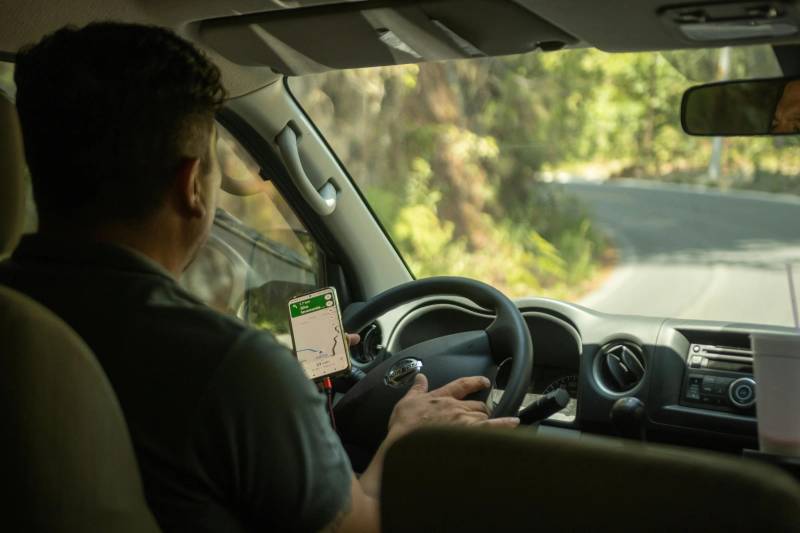
Warning: Don't let your tank run dangerously low while searching for a cheap station. Running out of fuel on a motorway is illegal in several European countries (including Germany) and can result in fines of €50 – €150. Always plan your stops with at least a quarter tank remaining.
Cross-Border Fuel Savings: When Driving Across Helps
If you live near a border, fuel tourism is one of the easiest ways to cut costs. The price differences between neighbouring countries can be dramatic.
The most exploitable border price gaps in Fuelconomy's coverage area:
- **France → Spain:** E10 in France costs approximately €2.114/L versus €1.743/L for Gasolina 95 E5 across the border – a gap of roughly €0.25/L. Drivers near Perpignan or Bayonne can save €12+ per fill-up by crossing into Spain.
- **France → Italy:** Diesel is actually more expensive in Italy than France, so the French-Italian border offers less opportunity. Petrol, however, is slightly cheaper on the Italian side.
- **Portugal → Spain:** Portuguese fuel carries heavier taxation. Drivers in Porto or the Algarve region can save by filling up in Spanish border towns.
Planning a cross-border trip? Fuelconomy lets you compare fuel costs across every country it covers on a single page, so you can plan exactly where to stop.
| Fuel | Min | Avg | Max |
|---|---|---|---|
| Gasolina Simples 95 | €1.895 | €2.099 | €2.243 |
| Gasóleo Simples | €1.949 | €2.257 | €2.404 |
| GPL Auto | €0.898 | €1.020 | €1.135 |
5 Habits That Save the Most Money at the Pump
Forget the hacks that save pennies. These five strategies deliver the most consistent results for European drivers.
1. Never fill up on the motorway. We've covered this, but it bears repeating: the average European driver who fills up exclusively on motorways spends €200 – €400 more per year than one who plans ahead. Check Fuelconomy before every long trip.
2. Use self-service pumps, everywhere. In Italy this is critical, but even in other markets, attended pumps or full-service lanes can carry a markup. If a station offers both, always choose self-service.
3. Fill up on the cheap side of the border. For drivers in Perpignan, Bayonne, Porto, or any border city, a five-minute detour into Spain can save €10+ per tank.
4. Track prices weekly. Fuel prices are not static. A station that was cheapest last month may have lost its edge. Fuelconomy's live price map updates twice daily from official government feeds and station-reported data, so you always see what's current.
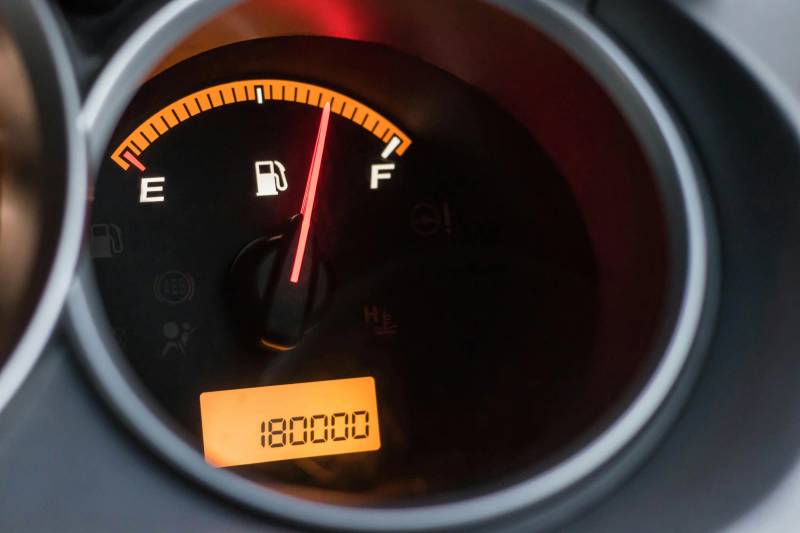
5. Fill up when passing a cheap station, not when the gauge is empty. Topping up when you spot a good price means you're never forced to fill at the nearest (expensive) option. Keep your tank above a quarter and opportunistically fill when prices are right.
How Much Can You Actually Save Per Year?
Let's put real numbers on this. A typical European driver covers around 12,000 – 15,000 km/year and fills up roughly 20 – 25 times annually, using about 1,000 – 1,200 litres of fuel.
If you consistently pay €0.331/L less than the average by choosing cheaper stations for Gazole in France, the maths is straightforward:
- Conservative estimate (€0.08/L saved): €0.08 × 1,100L = €88/year
- Moderate (€0.12/L saved): €0.12 × 1,100L = €132/year
- Aggressive (€0.18/L saved, combining supermarket + off-motorway): €0.18 × 1,100L = €198/year
For Italian drivers dealing with the self-service vs. servito split, the numbers are even more dramatic. Consistently choosing self-service for Gasolio in Italy saves roughly €0.15/L, translating to €165/year at 1,100L.
These aren't hypothetical figures. They're based on real price spreads from Fuelconomy's database of 52,000+ stations.
FAQ
How do I find the cheapest petrol station near me right now?
Use Fuelconomy's live map – enter your city or postcode and filter by fuel type. The map shows real-time prices from government feeds and station-reported data across France, Spain, Italy, Portugal, and the United Kingdom, updated twice daily.
Is supermarket fuel lower quality than branded fuel?
No. All fuel sold in the EU must meet the same EN 228 (petrol) and EN 590 (diesel) standards regardless of where it's sold. The base fuel comes from the same refineries. Branded stations sometimes add proprietary detergent additives, but independent testing shows minimal real-world performance difference for most vehicles.
Why is fuel in Spain so much cheaper than France?
Lower fuel taxes. Spain's excise duty on petrol is roughly €0.47/L compared to around €0.68/L in France. The pre-tax cost of fuel is nearly identical – taxation creates the gap. This is why crossing the French-Spanish border can save over €0.25/L.
Is it worth driving further to reach a cheaper station?
Generally, yes – up to a point. A modern diesel car uses about €0.08 – €0.12 worth of fuel per extra kilometre driven. If a station 5 km away saves you €0.10/L on a 50L fill-up (€5.00 total), the extra 10 km round trip costs about €1.00 in fuel. That's still a net saving of €4.00. Beyond 10 km of detour, the maths gets tighter.
What does self-service vs. servito mean in Italy?
Italian stations often display two price columns: a lower "fai-da-te" (self-service) price and a higher "servito" (attended) price. The servito option means a pump attendant fills your car. The difference is typically €0.12 – €0.18/L. Always choose self-service unless you have a specific reason not to.
How often do fuel prices change in Europe?
It depends on the country. In France, stations must report price changes to the government within 24 hours. In Spain, prices at branded stations typically shift once or twice per week. In the United Kingdom, there's no fixed schedule – prices can change daily. Fuelconomy updates its database twice daily to reflect the latest available data.
Can Fuelconomy show me the cheapest station along my driving route?
Fuelconomy's price map covers France, Spain, Italy, Portugal, and the United Kingdom. You can zoom into any area along your route, compare prices at nearby stations, and plan your stops accordingly. For cross-border trips, the platform lets you compare fuel costs between countries on a single page.
The Bottom Line
The average European driver can save €100 – €200 per year simply by choosing where to fill up more carefully. The biggest wins come from three habits: avoiding motorway stations, choosing self-service pumps in Italy, and using supermarket forecourts in France. For border-region drivers, adding cross-border fuel stops pushes savings even higher.
None of this requires extreme effort. A 30-second check of live prices before you leave the house is enough to make smarter choices at the pump.
Compare live prices across 52,000+ stations on Fuelconomy and start saving on your next fill-up.
Sources: