France Fuel Prices: Gazole, E10, SP95 — 10,000+ Stations
French drivers pay some of the highest fuel prices in Europe – roughly 16% above the EU average for petrol and 13% above for diesel, according to Fuelconomy's analysis of real-time pricing across more than 10,000 French stations. In early 2026, E10 sits around €1.70 – €1.75/L while Gazole hovers between €1.65 – €1.72/L. The gap between the cheapest supermarket forecourt and the priciest motorway station can easily top €0.25/L – on a 50L tank filled weekly, that difference costs you over €650 a year.
Average prices in this guide update every day from Fuelconomy data. Worked examples, tax breakdowns and forecasts use March 2026 prices.
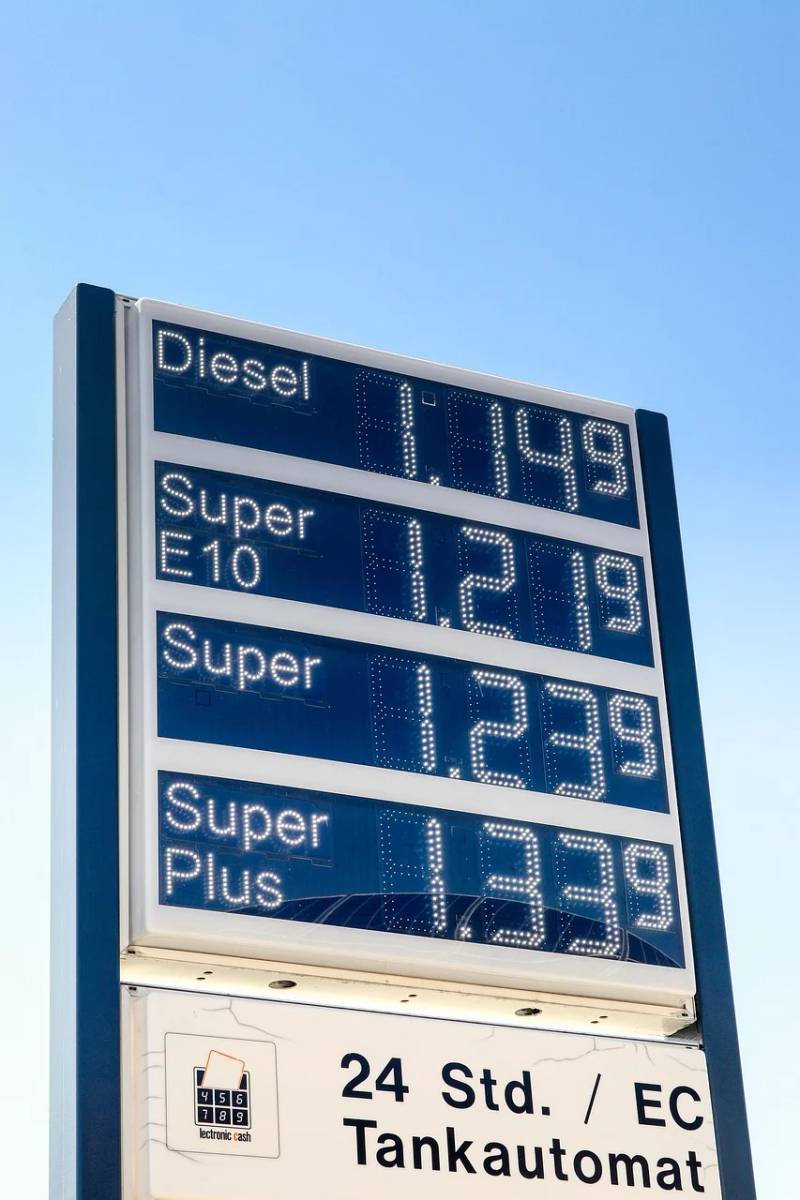
Key Facts – French Fuel Prices in 2026
- **Gazole (diesel) averages €2.369/L** nationally – nearly the same as petrol after years of tax convergence.
- E10 (the most common unleaded petrol) averages €2.110/L, making it France's default pump choice.
- SP95 trades at a small premium over E10, typically €0.02 – €0.04/L more.
- SP98 is the most expensive petrol grade, often €2.248/L – rarely worth it unless your car specifically requires 98-octane.
- E85 remains the bargain at roughly €0.899/L – less than half the price of standard unleaded.
- Taxes account for around 50 – 60% of the pump price, with the TICPE excise duty and 20% VAT stacked together.
- Supermarket stations (Leclerc, Carrefour, Intermarché) are consistently €0.05 – €0.15/L cheaper than branded oil-company stations.
Current Fuel Prices Across France
The live prices below are drawn from Fuelconomy's network of French stations, updated twice daily. Use them to compare your local area before your next fill-up.
| Fuel | Min | Avg | Max |
|---|---|---|---|
| E10 | €1.982 | €2.110 | €2.337 |
| Gazole | €2.203 | €2.369 | €2.523 |
| GPLc | €0.899 | €1.063 | €1.211 |
Diesel (Gazole) – Still France's Most Popular Fuel
Diesel powers roughly 55% of cars on French roads, though the share is falling fast as new diesel registrations shrink to single digits. The French government spent the last decade gradually aligning diesel taxation with petrol through incremental TICPE increases. The result: Gazole and E10 now trade within a few cents of each other, erasing the historic diesel discount that once made France a diesel-driving nation.
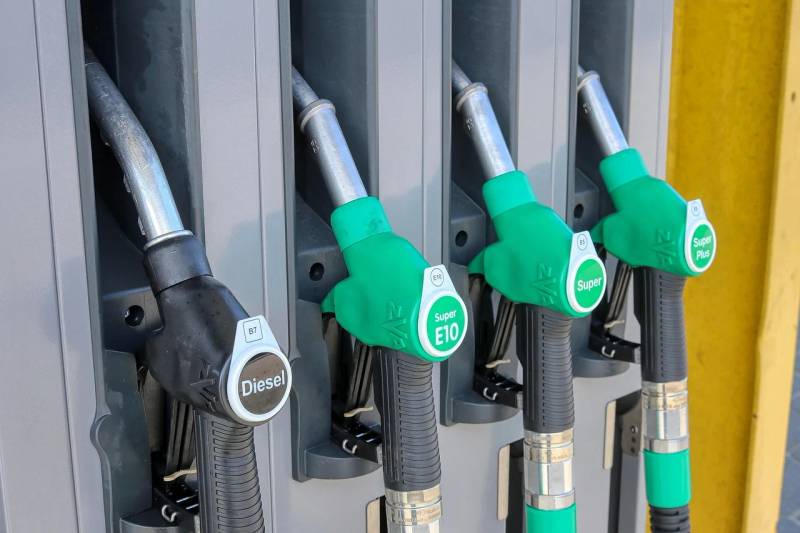
For diesel drivers, the best savings strategy is straightforward – avoid motorway stations and fill up at supermarket pumps. A driver in Lyon can easily find Gazole at €1.63/L at a hypermarché, while a branded station on the A6 might charge €1.88/L or more. Over 1,200 litres per year (the French average), that spread adds up to €300 saved simply by choosing where to stop.
| Fuel | Min | Avg | Max |
|---|---|---|---|
| Gazole | €2.203 | €2.369 | €2.523 |
Petrol – E10 vs SP95 vs SP98
France offers three grades of unleaded petrol, and most drivers pick the wrong one. Here's how they actually compare:
| Fuel | Octane Rating | Ethanol Content | Avg. Price | Best For |
|---|---|---|---|---|
| E10 | 95 RON | Up to 10% | €2.110/L | Most post-2000 petrol cars |
| SP95 | 95 RON | Up to 5% | €2.189/L | Older cars not E10-compatible |
| SP98 | 98 RON | Up to 5% | €2.248/L | High-performance engines that require 98 RON |
The bottom line: unless your owner's manual explicitly states "98 RON minimum", you're throwing away €0.10 – €0.15/L on SP98 for no measurable benefit. That's roughly €150/year wasted on a fuel your engine doesn't need. Check your fuel cap – if it says "E10 compatible" (and most cars built after 2000 are), stick with E10.
| Fuel | Min | Avg | Max |
|---|---|---|---|
| E10 | €1.982 | €2.110 | €2.337 |
E85 – France's Best-Kept Fuel Secret
At roughly €0.899/L, E85 costs less than half of regular petrol. Over 4,000 stations across France now sell it – about 42% of the national network – and nearly 93% of French drivers live within 10 km of an E85 pump.
The catch? E85 contains 60 – 85% bioethanol, which means roughly 25% higher consumption compared to standard petrol. Even accounting for that overconsumption, a driver covering 13,000 km/year saves around €730 annually versus E10. High-mileage drivers at 20,000 km/year pocket over €1,100 in savings.
To use E85, you need either a factory flex-fuel vehicle or a government-approved conversion kit (boîtier E85) installed on a compatible petrol car. The kit costs €700 – €1,200 including installation, meaning it pays for itself within the first year for most drivers.
| E10 (Standard Petrol) | E85 (Superethanol) | |
|---|---|---|
| Price per litre | €1.72 | €0.75 |
| Consumption (8L/100km base) | 8.0 L/100km | 10.0 L/100km |
| Annual fuel cost (13,000 km) | €1,789 | €975 |
| Annual savings | – | €814 |
Important: Not every petrol engine is compatible with E85 conversion. Check the government's approved list of conversion kits and eligible vehicles before investing. Running E85 in an unconverted engine can damage fuel lines and injectors.
Why French Fuel Is So Expensive – The Tax Breakdown
When you pay €1.72 for a litre of E10, barely half that goes toward the actual fuel. The rest is tax – and understanding the split explains why French prices sit so far above the EU average.
| Component | Approx. Share | Amount (est.) |
|---|---|---|
| Crude oil + refining | ~30% | €0.52 |
| Transport & distribution | ~7% | €0.12 |
| Retailer margin | ~1% | €0.01 |
| TICPE (excise duty) | ~38% | €0.66 |
| VAT (20%, applied on everything above) | ~24% | €0.41 |
| Total pump price | 100% | €1.72 |
The TICPE (Taxe Intérieure de Consommation sur les Produits Énergétiques) is France's main fuel excise duty. It includes a carbon component introduced in 2014, and regional authorities can add a small surcharge on top, creating minor price variations between départements. VAT at 20% is calculated on the product price plus the TICPE – a tax-on-tax structure that amplifies every crude oil price swing.
(Updated: March 2026)
Cheapest Fuel by City – Where to Fill Up
Fuel prices vary dramatically across France. Motorway stations routinely charge €0.20 – €0.30/L more than supermarket forecourts in the same city. Here's a snapshot of where to find the best deals in France's largest cities.
| City | Cheapest Gazole | Cheapest E10 | Tip |
|---|---|---|---|
| Paris | €2.250 | €1.990 | Avoid inner-city branded stations; head to périphérique-adjacent supermarkets |
| Marseille | €2.250 | €1.990 | Supermarket stations north of the city offer the best rates |
| Lyon | €2.250 | €1.990 | Fill up in Vénissieux or Villeurbanne before hitting the A6/A7 |
| Toulouse | €2.250 | €1.990 | Consistently among the cheapest major cities in France |
| Bordeaux | €2.250 | €1.990 | Hypermarché stations on the rocade (ring road) beat city-centre pumps |
| Lille | €2.250 | €1.990 | Close to Belgium – cross-border fill-ups can save a few cents on diesel |
| Nice | €2.250 | €1.990 | Côte d'Azur premiums apply; fill up inland before reaching the coast |
| Nantes | €2.250 | €1.990 | Western France generally tracks below the national average |
| Strasbourg | €2.419 | €2.149 | Consider a quick hop to Germany for cheaper petrol |
Use Fuelconomy's live price map to check exact station-by-station prices in any French city before you fill up.
| Fuel | Min | Avg | Max |
|---|---|---|---|
| E10 | €1.990 | €2.130 | €2.429 |
| Gazole | €2.250 | €2.393 | €2.699 |
| GPLc | €1.024 | €1.044 | €1.064 |
How France Compares to Other European Countries
French fuel prices sit in the upper tier of the EU, but not at the absolute top. Here's where France stands against its neighbours and other countries tracked by Fuelconomy:
| Country | Avg. Diesel | Avg. Petrol (95 RON) | Tax Share |
|---|---|---|---|
| France | €2.369 | €2.110 | ~60% |
| Spain | €1.894 | €1.742 | ~48% |
| Italy | €2.260 | €1.997 | ~60% |
| Portugal | €2.262 | €2.092 | ~55% |
| United Kingdom | £1.989/L | £1.727/L | ~50% |
Spain remains the clear winner for drivers crossing borders – filling a 60L tank with Gasóleo A in Spain instead of Gazole in France saves roughly €12 – €18 per tank. For drivers in Toulouse, Perpignan, or Bayonne, a detour south of the border can make real financial sense.
7 Practical Ways to Save on Fuel in France
Knowing the prices is only half the battle. Here's how to keep your annual fuel bill as low as possible:
1. Fill up at supermarket stations. Leclerc, Carrefour, and Intermarché consistently undercut branded stations by €0.05 – €0.15/L. At 1,200L/year, that's €60 – €180 saved with zero effort.
2. Compare prices before every fill-up. Fuelconomy tracks prices across thousands of French stations – a 30-second check before you leave can save you €5 – €10 per tank.
3. Consider an E85 conversion. If you drive a compatible petrol car and cover more than 10,000 km/year, the €700 – €1,200 kit investment pays for itself within 12 months.
4. Avoid autoroute stations. Motorway fuel carries a premium of €0.15 – €0.30/L. Plan your route to exit briefly at a nearby town for cheaper fuel – the 5-minute detour saves real money over a year.
5. Fill up on Monday or Tuesday. French fuel prices tend to peak before weekends and holidays. Mid-week fill-ups are statistically cheaper, though the difference is small (€0.01 – €0.03/L).
6. Drive at 110 km/h instead of 130 km/h on autoroutes. Dropping from 130 to 110 km/h reduces fuel consumption by roughly 20% – the single biggest lever you have. On a Paris to Lyon run, that's about 8 – 10 litres saved per trip.
**7. Check cross-border prices if you live near Spain, Germany, or Belgium.** Fuel is often cheaper just across the border, especially for petrol.
Frequently Asked Questions
What is the average price of diesel in France in 2026?
Gazole averages €2.369 per litre today, though prices vary significantly by location. Supermarket stations are typically the cheapest, while motorway stations can charge €0.20 – €0.30/L more. Check Fuelconomy's live price widget above for the most current national average.
Is diesel or petrol cheaper in France?
Diesel and petrol prices in France are now nearly identical. Government policy over the past decade brought diesel taxation in line with petrol through TICPE increases, closing a gap that once made diesel significantly cheaper. In 2026, Gazole is typically €0.02 – €0.05/L less than E10, but the difference is negligible.
Is E85 worth it in France?
For most petrol-car drivers, yes. At roughly €0.899/L, E85 is less than half the price of E10. Even with 25% higher fuel consumption, a driver covering 13,000 km/year saves about €730 annually. You'll need either a flex-fuel vehicle or an approved conversion kit (€700 – €1,200). The investment pays for itself within the first year.
Why is fuel so expensive in France compared to Spain?
Taxes. France levies a TICPE excise duty of roughly €0.60 – €0.68 per litre on petrol, plus 20% VAT on top of everything including the excise itself. Spain applies lower excise rates, resulting in pump prices that are typically €0.20 – €0.25/L cheaper for comparable fuel grades.
Where can I find the cheapest fuel near me in France?
Supermarket stations (Leclerc, Carrefour, Intermarché, Auchan) offer the lowest prices in nearly every French city. Fuelconomy's live comparison map covers thousands of stations across France – search by city or postcode to find the cheapest pump before your next fill-up.
What fuel should I use in France as a tourist?
If you're driving a rental car with a petrol engine, use E10 – it's the cheapest unleaded grade and compatible with virtually all modern cars. For diesel rentals, Gazole is the standard choice. Avoid SP98 unless the rental documentation specifically requires it – you'll pay more for no benefit.
Do French fuel prices change on certain days of the week?
Prices at most stations update one to several times per week. There's a slight statistical tendency for lower prices early in the week (Monday – Tuesday) and higher prices before weekends and public holidays, but the variation is small – typically €0.01 – €0.03/L.
The Bottom Line
France's fuel prices rank among the highest in Europe, driven overwhelmingly by taxation rather than crude oil costs. The smartest moves for French drivers are also the simplest: fill up at supermarket stations, compare prices before every stop, and seriously consider E85 if your car is compatible. A driver who follows all three strategies can realistically save €300 – €800 per year compared to filling up at the nearest branded station without checking prices.
Compare live prices across thousands of French stations on Fuelconomy and find the cheapest pump near you before your next fill-up.
---
Sources:
- https://prix-carburants.gouv.fr – French government official fuel price data
- https://energy.ec.europa.eu/data-and-analysis/weekly-oil-bulletin_en – European Commission Weekly Oil Bulletin
- https://www.douane.gouv.fr/fiche/introduction-taxes-oil-products – French Customs, TICPE overview
- https://www.epure.org/press-release/ethanol-rich-e85-fuel-now-available-in-4000-filling-stations-in-france/ – ePURE E85 station milestone data
- https://taxfoundation.org/data/all/eu/diesel-gas-taxes-europe/ – Tax Foundation, European fuel tax comparison 2026
- https://www.planete-energies.com/en/media/article/how-costs-and-taxes-determine-fuel-prices – Planète Énergies, fuel cost breakdown