Spain Fuel Prices: Gasóleo A & Gasolina 95 — 12,000+ Stations
Filling up in Spain costs less than the EU average – but the gap between the cheapest and most expensive station can top €0.30/L, enough to add €360 to your annual fuel bill if you pick the wrong forecourt. Based on Fuelconomy's real-time data from over 11,600 Spanish stations, the national average sits around €1.45 – €1.50/L for Gasolina 95 E5 and €1.40 – €1.48/L for Gasóleo A in early 2026 – roughly 5 – 8% below the EU average for both fuels.
Average prices in this guide update every day from Fuelconomy data. Worked examples, tax breakdowns and forecasts use March 2026 prices.
That sounds comfortable until you realise Spanish pump prices are volatile: Middle East tensions pushed Brent crude from $65 to $82/barrel in a single week this March, and wholesale diesel in London jumped by $140/tonne in one session. In Spain, that kind of swing can translate into a €0.15 – €0.30/L rise within days. Knowing where, when, and how to refuel is no longer optional – it is the simplest way to protect your budget.
Key facts for drivers in Spain (2026):
- National average petrol (Gasolina 95): €1.743/L – around 5.5% below the EU mean
- National average diesel (Gasóleo A): €1.893/L – around 8% below the EU mean
- Number of stations tracked: over 11,600 gasolineras, including self-service and low-cost brands
- Cheapest diesel found: as low as €1.639/L at discount forecourts
- New 2026 diesel tax: excise duty rising from €0.379/L to €0.473/L, adding ~€0.09/L at the pump
- Biggest price swing by region: Andalucía and Murcia cheapest; Balearic Islands and Catalonia most expensive
- Potential annual saving from switching to a low-cost station: €200 – €350
Current Fuel Prices Across Spain
The live widget below pulls from Fuelconomy's database of over 11,600 Spanish stations, updated twice daily with data from the Spanish Ministry of Industry.
| Fuel | Min | Avg | Max |
|---|---|---|---|
| Gasolina 95 E5 | €1.474 | €1.743 | €1.999 |
| Gasóleo A | €1.639 | €1.893 | €2.199 |
| Gases Licuados del Petróleo | €0.781 | €1.111 | €1.290 |
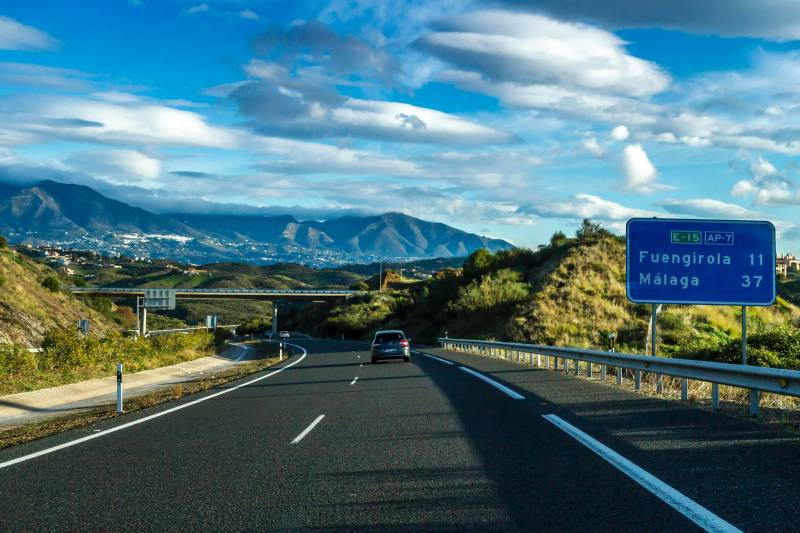
Prices vary sharply by region, brand, and even time of week. Motorway service areas (áreas de servicio) typically charge 10 – 15% more than city stations for the same fuel. A driver filling a 50L tank on the AP-7 near Málaga could pay €7 – €8 more than at a low-cost station just a few kilometres off the exit.
Fuel Types Available at Spanish Stations
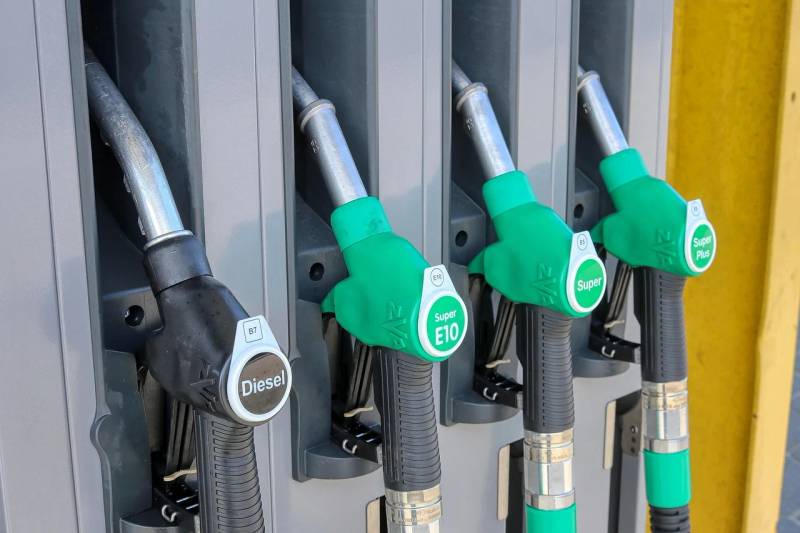
Spanish gasolineras label their pumps differently from the rest of Europe, which catches tourists and new residents off guard. Here is what each grade actually is:
| Pump Label | Category | Equivalent | Who Needs It |
|---|---|---|---|
| Gasolina 95 E5 | Petrol (95 RON) | E5 / Euro 95 | Most petrol cars – the default choice |
| Gasolina 98 E5 | Petrol (98 RON) | E5 Premium / Super | High-performance engines only |
| Gasolina 95 E10 | Petrol (95 RON, 10% ethanol) | E10 | Newer petrol cars (post-2011) |
| Gasóleo A | Diesel | EN 590 / B7 | All diesel passenger cars |
| Gasóleo Premium | Premium diesel | Enhanced additives | Optional – marginal benefit for most drivers |
| Gases Licuados del Petróleo | LPG / Autogas | GPL | Dual-fuel or converted vehicles |
Warning: Gasóleo B is red-dyed agricultural diesel. Using it in a passenger car is illegal and carries fines of up to €6,000. The pump nozzle is usually a different colour, but always check the label before filling.
Is Gasolina 98 worth the extra cost?
For the vast majority of drivers, no. Gasolina 98 E5 costs roughly €0.15 – €0.20/L more than 95-octane, which adds up to €180 – €240/year for a driver covering 15,000 km. Unless your car's manual requires 98 RON (common in some German sports models), you are paying for a marginal anti-knock benefit that most modern ECUs handle automatically with lower-octane fuel.
How Spanish Fuel Prices Compare in Europe
Spain ranks around 14th out of 27 EU countries for petrol prices – firmly in the affordable half. Here is how the main fuels stack up against neighbouring countries:
| Country | Petrol (95 RON) | Diesel | VAT on Fuel |
|---|---|---|---|
| Spain | €1.743/L | €1.893/L | 21% |
| France | €2.114/L | €2.367/L | 20% |
| Portugal | €2.099/L | €2.257/L | 23% |
| Italy | €1.997/L | €2.260/L | 22% |
A driver crossing from France into Spain on the AP-7 at La Jonquera saves roughly €0.20 – €0.30/L immediately. For a 70L SUV tank, that is €14 – €21 per fill-up – one of the reasons French shoppers near the border regularly drive south for fuel.
Planning a cross-border trip? Fuelconomy lets you compare fuel costs across every country it covers on a single page, so you can plan your fill-ups around the cheapest stops.
The 2026 Diesel Tax Increase – What Changed
The biggest regulatory shift of 2026 for Spanish motorists is the alignment of diesel excise duty with petrol. Spain had historically taxed diesel at a lower rate – €0.379/L versus €0.473/L for petrol. Under pressure from the EU (as a condition for Next Generation funds), the government raised diesel excise duty to match petrol, effective from early 2025 and fully phased in by 2026.
What this means at the pump:
- Diesel excise duty rose by approximately €0.09/L
- With 21% VAT on top, the real pump increase is roughly €0.11/L
- A 50L fill-up now costs around €5.50 more than before the reform
- Over a year (assuming 1,200L of diesel), that is roughly €130 extra
Key detail: The diesel tax increase applies only to mainland Spain and the Balearic Islands. The Canary Islands, Ceuta, and Melilla are exempt, so drivers in Santa Cruz and Las Palmas continue to pay lower rates.
This reform affects over 18 million diesel vehicles on Spanish roads. The long-term policy aim is to discourage diesel in favour of petrol hybrids and EVs, but for now, most Spanish fleets remain diesel-heavy – roughly 51% of all registered vehicles.
Cheapest and Most Expensive Regions
Regional price gaps in Spain are significant. Competition, logistics costs, and local surcharges all play a role. Based on data from Fuelconomy and the Spanish Ministry of Industry:
Cheapest regions for fuel:
- Andalucía – High station density and strong low-cost brand presence. Cities like Sevilla, Córdoba, and Granada consistently post below-average prices.
- Murcia – Competitive market with many independent operators. Murcia and Cartagena are reliable for cheap fill-ups.
- Castilla-La Mancha – Lower operating costs translate to lower pump prices, especially around Albacete.
Most expensive regions for fuel:
- Balearic Islands – Shipping costs push prices up. Palma averages €0.08 – €0.12/L above the mainland.
- Catalonia – Higher local taxes and dense urban competition still leave Barcelona prices above the national average.
- Basque Country – Bilbao and Vitoria Gasteiz run slightly above average despite strong wages.
Use Fuelconomy's live price map to compare stations in your area before filling up – the savings add up faster than most drivers expect.
Fuel Prices in Spain's Largest Cities
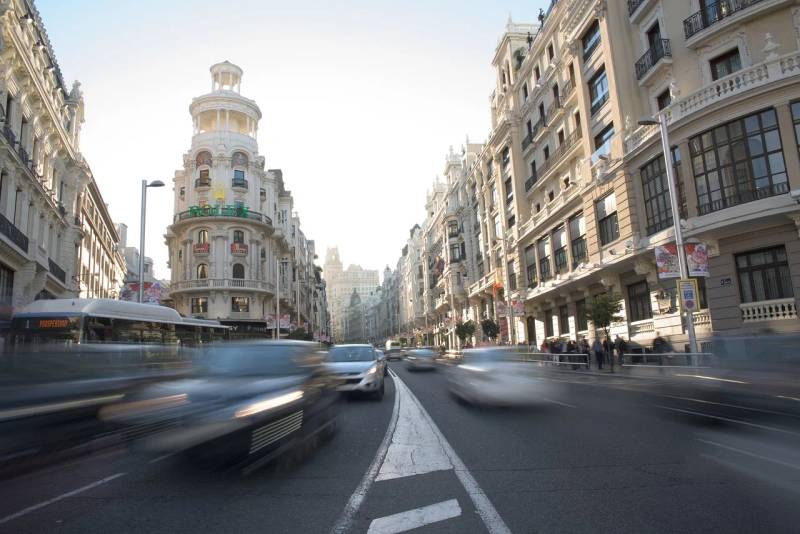
Here is a snapshot of how fuel costs compare across Spain's biggest metro areas. Use the live widgets to check today's exact prices:
Madrid
| Fuel | Min | Avg | Max |
|---|---|---|---|
| Gasolina 95 E5 | €1.599 | €1.779 | €1.889 |
| Gasóleo A | €1.739 | €1.931 | €2.035 |
| Gases Licuados del Petróleo | €0.899 | €1.114 | €1.199 |
Spain's capital has fierce competition between major brands and low-cost operators, especially along the M-30 and M-40 ring roads. Prices tend to be slightly below the national average for a city of its size. Avoid filling up at stations inside the city centre – suburban and industrial-zone stations near Alcorcón, Móstoles, and Alcobendas are consistently cheaper.
Barcelona
| Fuel | Min | Avg | Max |
|---|---|---|---|
| Gasolina 95 E5 | €1.599 | €1.808 | €1.899 |
| Gasóleo A | €1.759 | €1.931 | €2.019 |
| Gases Licuados del Petróleo | €0.879 | €1.082 | €1.175 |
Barcelona's pump prices sit slightly above the national average. Low-cost chains are expanding in the metropolitan belt around Badalona, Sabadell, and Tarrasa, offering discounts of €0.10 – €0.15/L compared to branded stations on the Diagonal.
Valencia
| Fuel | Min | Avg | Max |
|---|---|---|---|
| Gasolina 95 E5 | €1.479 | €1.742 | €1.989 |
| Gasóleo A | €1.649 | €1.863 | €2.058 |
| Gases Licuados del Petróleo | €0.895 | €1.054 | €1.139 |
Valencia benefits from its position on a major logistics corridor, keeping prices competitive. The surrounding towns of Alicante and Elche along the coast often match or beat Valencia's best prices.
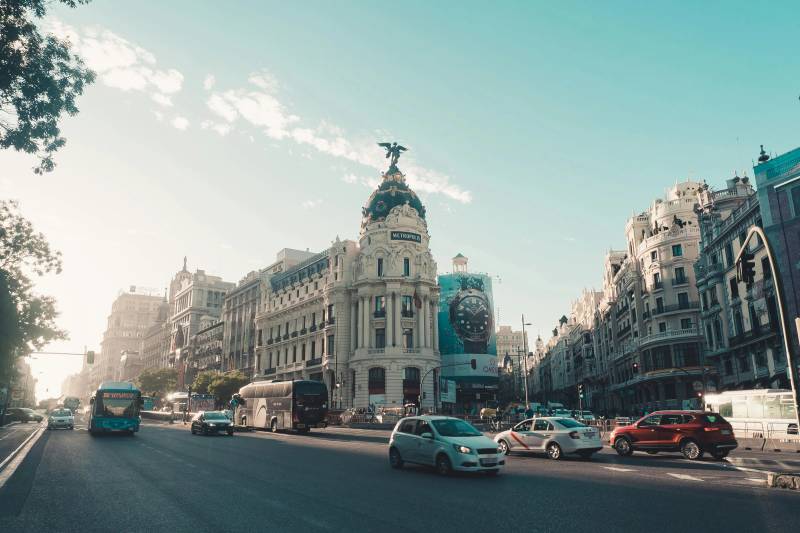
Sevilla
| Fuel | Min | Avg | Max |
|---|---|---|---|
| Gasolina 95 E5 | €1.527 | €1.735 | €1.896 |
| Gasóleo A | €1.715 | €1.896 | €2.060 |
| Gases Licuados del Petróleo | €0.909 | €1.134 | €1.199 |
Seville is one of Spain's cheapest major cities for fuel, thanks to Andalucía's competitive market and high density of low-cost operators.
7 Ways to Save on Fuel in Spain
Smart refuelling habits can save a Spanish driver €200 – €350 per year. None of these require changing your car:
1. Fill up at low-cost stations
Self-service, unmanned stations from low-cost chains routinely undercut major brands by €0.10 – €0.15/L. They buy the same refined product from the same depots – the savings come from lower staffing and simpler forecourts. On a 50L tank, that is €5 – €7.50 per fill-up.
2. Never refuel on the motorway
Motorway áreas de servicio charge a premium of 10 – 15%. Before a long trip, fill up in town or use Fuelconomy to find the cheapest station near your route. A two-minute detour off the AP-7 corridor can save €6 – €10 per tank.
3. Fill up on Monday or Tuesday
Pump prices in Spain tend to peak on Fridays and over weekends, when leisure travel demand spikes. Government pricing data shows Monday and Tuesday are typically the cheapest days to refuel – the difference can be €0.02 – €0.05/L.
4. Compare prices before every stop
Fuelconomy tracks prices from over 11,600 Spanish stations. Check the live map or city page before every fill-up. Even a small habit of checking saves €100+/year.
5. Cross the border if you live near France
If you drive regularly near the French border, filling up south of La Jonquera instead of north of Perpignan can save €0.20 – €0.30/L. For weekly fill-ups, that is over €500/year.
6. Consider LPG for high-mileage drivers
Gases Licuados del Petróleo (autogas) costs roughly half the price of petrol in Spain. Converting a compatible car costs €1,500 – €2,500, with payback in 12 – 18 months for drivers covering 25,000+ km/year.
7. Maintain tyre pressure and steady speed
Under-inflated tyres increase fuel consumption by 3 – 5%. Driving at 110 km/h instead of 130 km/h on the autopista cuts fuel use by roughly 20%. Free savings, no station-hunting required.
Tax Breakdown – What You Actually Pay Per Litre
Every litre of fuel in Spain carries a heavy tax load. Understanding the breakdown puts those pump prices in perspective:
| Component | Gasolina 95 (approx.) | Gasóleo A (approx.) |
|---|---|---|
| Raw product + margin | ~€0.66/L (36%) | ~€0.66/L (38%) |
| Excise duty (national + special) | ~€0.47/L (43%) | ~€0.47/L (43%) |
| VAT (21%) | ~€0.32/L (21%) | ~€0.31/L (19%) |
| Total pump price | ~€1.45 – €1.50/L | ~€1.40 – €1.48/L |
(Updated: March 2026)
Roughly 64% of what you pay is tax. Since excise duty is a fixed amount per litre (not a percentage), it hurts proportionally more when crude prices are low. The only component that fluctuates daily is the raw product cost, which tracks international Brent crude and refinery margins.
FAQ
How much does petrol cost in Spain right now?
The national average for Gasolina 95 E5 is approximately €1.743/L today, though prices can vary by €0.30/L between the cheapest and most expensive stations. Check Fuelconomy's Spain page for today's live average.
Is diesel cheaper than petrol in Spain in 2026?
Gasóleo A is still slightly cheaper than Gasolina 95 E5 at the pump – roughly €0.02 – €0.08/L less. However, the gap has narrowed significantly after the 2025–2026 diesel excise duty increase of approximately €0.09/L. The days of diesel being dramatically cheaper in Spain are over.
What is the cheapest fuel in Spain?
In absolute terms, Gases Licuados del Petróleo (autogas/LPG) is the cheapest motor fuel, typically around €1.111/L. Among mainstream fuels, Gasóleo A remains the cheapest liquid option for most drivers.
Why are Spanish fuel prices lower than France or Italy?
Three reasons: lower excise duty rates (even after the 2026 reform), Spain's geographic access to diverse crude oil suppliers (Mexico, Saudi Arabia, Iraq, Angola), and intense domestic competition from a growing number of low-cost station chains.
Are fuel prices different in the Canary Islands?
Yes. The Canary Islands are exempt from Spain's hydrocarbon excise duty, so fuel in Las Palmas and Santa Cruz is typically €0.15 – €0.25/L cheaper than on the mainland.
How many petrol stations are there in Spain?
Spain has approximately 11,600+ stations (gasolineras), including self-service, low-cost, and traditional full-service forecourts. Fuelconomy tracks prices across this network in real time.
When is the cheapest day to buy fuel in Spain?
Government pricing data suggests Monday and Tuesday tend to have the lowest average pump prices. Prices typically rise from Thursday through the weekend as leisure travel demand increases.
Can I pay with a foreign credit card at Spanish petrol stations?
Yes. Visa and Mastercard (including contactless) are accepted at virtually all stations. Unmanned 24-hour stations require card payment. A few smaller rural stations may prefer cash.
The Road Ahead – Where Spanish Fuel Prices Are Heading
Spain's fuel market faces two competing forces. On one side, the government is pushing harder on green taxation – the diesel excise alignment is just the beginning, and further carbon-related surcharges are expected as Spain meets its EU climate commitments. On the other, global crude prices remain the dominant variable, and geopolitical instability (particularly in the Middle East and shipping lanes) can move pump prices by double digits within a week.
For 2026, the practical advice is the same as always: track prices, fill up smart, and avoid paying a premium out of habit. The difference between the cheapest and priciest station in Madrid alone can exceed €0.25/L. On 1,200 litres a year, that is €300 you either keep or give away.
Compare live prices across Spain's 11,600+ stations on Fuelconomy and find the cheapest fuel near you before your next fill-up.
Sources:
- European Commission Weekly Oil Bulletin
- Ministerio para la Transición Ecológica y el Reto Demográfico, Geoportal de Gasolineras
- Tax Foundation, Diesel and Gas Taxes in Europe 2026
- Agencia Tributaria, Impuesto sobre Hidrocarburos
- Ministerio de Industria, Turismo y Comercio, Precios de Carburantes
---