What Fuel Does My Car Use? European Fuel Label Guide 2026
The circle, square and diamond symbols on European fuel pumps are not decoration – they are a standardised labelling system that tells you exactly what is in the nozzle and whether your car can handle it. Based on Fuelconomy's live dataset of over 6,789 stations in France alone and tens of thousands more across five other markets, the gap between the cheapest and most expensive fuel grade at any given station can be significant – and picking the wrong one is worse than overpaying. Roughly 150,000 drivers in the UK alone misfuel every year, and repair bills range from €150 for a simple drain to €10,000+ for a destroyed injection system. This guide explains every label you will encounter at the pump, tells you how to match it to the sticker on your filler cap, and breaks down how fuel names change as you cross borders.
Key facts:
- EU fuel labelling became mandatory on 12 October 2018 under Directive 2014/94/EU, based on the EN 16942 standard
- Circles = petrol, squares = diesel, diamonds = gaseous fuels – across all EU/EEA countries
- E5 and E10 are the two main petrol grades in Europe – the number is the maximum percentage of ethanol blended in
- B7 is standard diesel across most of Europe – the number is the maximum percentage of biodiesel (FAME)
- XTL is renewable paraffinic diesel (often sold as HVO) – a newer label appearing at an increasing number of stations
- The same fuel goes by different names in every country: diesel is Gazole in France, Gasolio in Italy, Gasóleo A in Spain
- Cars built after 2011 are almost universally compatible with E10; older vehicles should stick with E5
How Fuelconomy Data Works
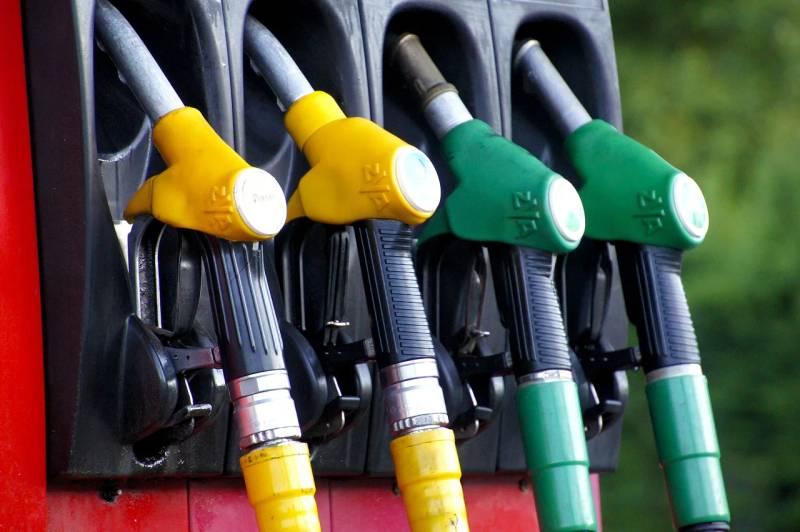
Fuelconomy aggregates fuel prices from official government feeds and regulated station reporting systems, then standardises them into a single live database across France, Spain, Italy, Portugal, the United Kingdom and Germany. All station counts, average prices and price spreads referenced in this article are drawn from the Fuelconomy dataset as of March 2026. Inline prices update automatically as new data arrives.
The EU Fuel Label System: Circles, Squares and Diamonds
Before 2018, fuel pump colours and naming conventions varied wildly across Europe. Green nozzles meant petrol in one country and diesel in another. The EN 16942 standard replaced that chaos with three simple shapes, each containing a code that tells you the fuel type and its bio-component content.
Petrol – the circle
Every petrol nozzle in the EU carries a circular label. Inside the circle is a letter-number code:
- E5 – up to 5% ethanol blended with unleaded petrol (typically 95 or 98 RON)
- E10 – up to 10% ethanol blended with unleaded petrol (typically 95 RON)
- E85 – up to 85% ethanol, for dedicated flex-fuel vehicles only
The "E" stands for ethanol. The number is the maximum volume percentage of bioethanol in the blend. E10 is now the standard grade in France, Germany and the United Kingdom. E5 remains available as a premium option – often labelled SP98 or Super – and is the safer choice for pre-2011 vehicles.
Diesel – the square
Diesel nozzles carry a square label:
- B7 – up to 7% biodiesel (FAME) blended with fossil diesel – the current European standard
- B10 – up to 10% biodiesel, available in some markets
- XTL – paraffinic diesel produced from renewable sources (HVO, GTL or e-fuels), meeting EN 15940
The "B" stands for biodiesel (fatty acid methyl ester, or FAME). XTL stands for "X-to-Liquid" – the X is a placeholder for whatever raw material went in (biomass, gas, renewable electricity). HVO, the most common XTL variant, is made from waste cooking oils and animal fats and can reduce lifecycle CO₂ emissions by up to 90% compared to fossil diesel.
Gaseous fuels – the diamond
Diamond-shaped labels appear on pumps dispensing:
- LPG – liquefied petroleum gas (called GPLc in France, GPL in Italy and Portugal)
- CNG – compressed natural gas (Metano in Italy, GNC in Portugal)
- LNG – liquefied natural gas
- H2 – hydrogen
Where to Find the Label on Your Car
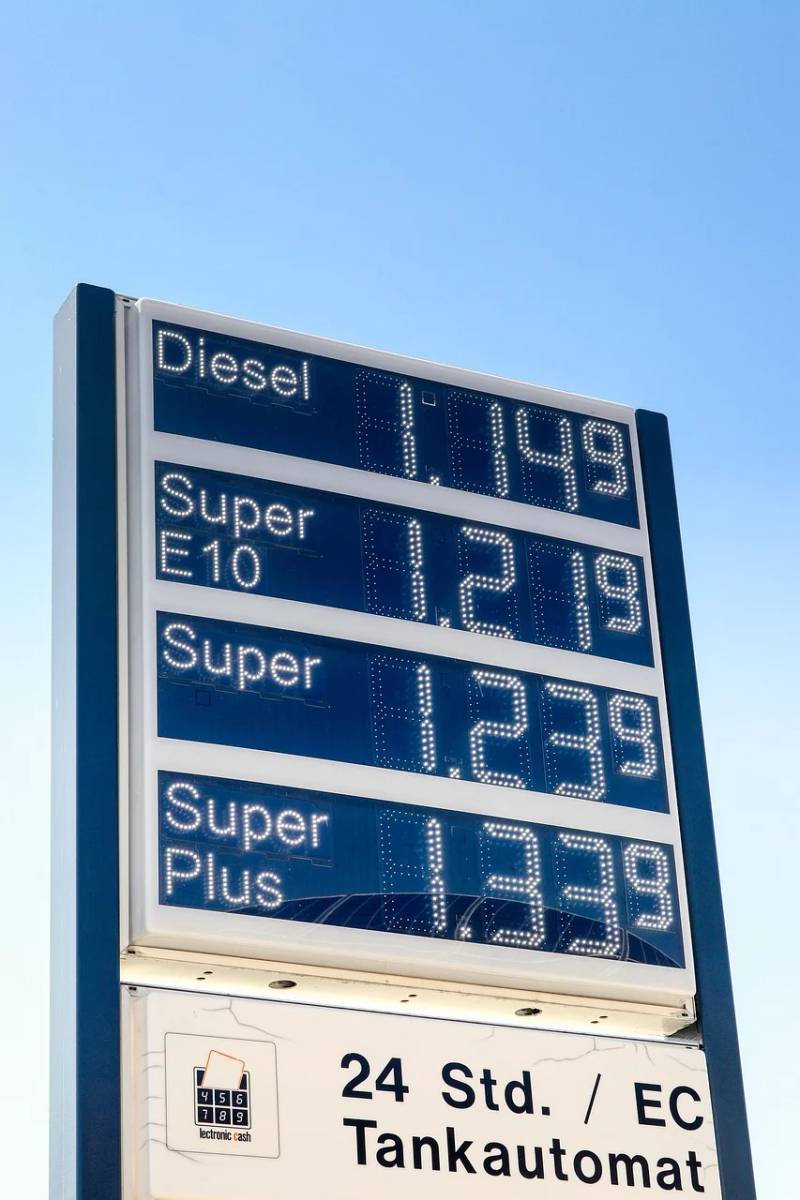
The EU system works in two places: on the pump and on the vehicle. For cars manufactured from late 2018 onward, a matching label should appear in at least one of these locations:
- Inside the fuel filler flap – the most common spot. Open the cap and look for a circle (petrol) or square (diesel) sticker showing E5, E10, B7 or XTL.
- In the owner's manual – the fuel specification section lists compatible fuel grades with the corresponding EU label symbols.
- On the vehicle's infotainment system – some newer models display fuel compatibility in the digital handbook.
For cars registered before October 2018, the filler flap sticker may not be present. In that case, check the owner's manual, look for text printed on the fuel cap itself ("Unleaded Only", "Diesel"), or search for the model badge on the rear of the car – abbreviations like TDI, HDi, dCi, JTD and CDTi indicate a diesel engine.
If you are renting a car abroad, always confirm the fuel type with the rental desk before leaving the lot. A significant share of misfuelling incidents involve drivers unfamiliar with the vehicle. The repair bill lands on you, and most rental damage waivers do not cover it.
What Each Fuel Grade Actually Means for Your Engine
Not all labels are interchangeable, even within the same shape. Here is what matters in practice:
E5 vs E10 – the ethanol question
E10 contains roughly double the ethanol of E5. Ethanol has about 33% less energy per litre than pure petrol, which means E10 delivers marginally lower fuel economy – roughly 1 – 2% fewer kilometres per tank. For most drivers, the difference is negligible. The real issue is compatibility: ethanol is mildly corrosive and can degrade rubber seals, fuel hoses and carburettor components in older engines. Cars built from 2011 onward are required to be E10-compatible. Vehicles manufactured between 2000 and 2010 vary by brand – the ACEA maintains a compatibility list by manufacturer. Classic and pre-2000 cars should use E5.
In the United Kingdom, E10 became the standard 95-octane petrol in September 2021, while E5 is sold as the premium "super unleaded" option. In France, E10 has been standard since 2009 and remains the cheapest unleaded grade at most stations, averaging €2.184/L across 6,789 stations tracked by Fuelconomy.
B7 vs B10 vs XTL – the diesel spectrum
B7 is the safe default – compatible with every diesel car sold in Europe. B10 is approved for most post-2000 diesels but not all; check your manufacturer's guidance before using it regularly. XTL (HVO) is a drop-in replacement for fossil diesel that actually outperforms it: a cetane number around 70 – 80 (versus roughly 51 for standard diesel), no sulphur, no aromatics, better cold-weather behaviour. The catch is availability and price – XTL is widespread in Scandinavia and growing in the United Kingdom, Italy and Spain, but it typically costs more per litre than B7.
If your filler cap carries both a B7 square and an XTL square, you can use either fuel or mix them in any ratio.
Fuel Names Across Europe: A Country-by-Country Decoder
The EU label shapes are standardised, but the marketing names on the actual pump handle are not. This is where cross-border confusion hits hardest. The table below maps the standard grades to their local names in each Fuelconomy market.
| EU Label | France | Spain | Italy | Portugal | United Kingdom | Germany |
|---|---|---|---|---|---|---|
| E5 (95 RON) | SP95 | Gasolina 95 E5 | Benzina | Gasolina Simples 95 | E5 (Super) | Super E5 |
| E5 (98 RON) | SP98 | Gasolina 98 E5 | Benzina Speciale | Gasolina Especial 98 | E5 (Super) | Super E5 |
| E10 | E10 | Gasolina 95 E10 | – | – | E10 | Super E10 |
| E85 | E85 | – | – | – | – | – |
| B7 (diesel) | Gazole | Gasóleo A | Gasolio | Gasóleo Simples | B7 | Diesel |
| LPG | GPLc | Gases Licuados del Petróleo | GPL | GPL Auto | – | – |
A few things to notice. France retained its legacy names alongside the EU labels – SP95 and SP98 both sit within the E5 circle, while E10 gets its own. In Spain, "Gasóleo A" is road diesel while "Gasóleo B" is agricultural red diesel – illegal for road use. In Italy, standard unleaded is simply Benzina, but there are dozens of premium branded variants (Blue Super, V Power, Benzina 100 Ottani) that all fall under the E5 circle.
What Fuel Costs Right Now Across Fuelconomy Markets
Understanding labels is half the equation. The other half is knowing what you will pay. Prices for the same EU-labelled fuel vary dramatically between countries – driven by different excise duties, VAT rates and local competition.
| Country | Standard Petrol Avg | Standard Diesel Avg | Stations Tracked |
|---|---|---|---|
| France | €2.184/L (E10) | €2.367/L (Gazole) | 6,789 |
| Spain | €1.811/L (Gasolina 95 E5) | €1.910/L (Gasóleo A) | 11,198 |
| Italy | €2.055/L (Benzina) | €2.250/L (Gasolio) | 20,689 |
| Portugal | €2.151/L (Gasolina Simples 95) | €2.252/L (Gasóleo Simples) | 2,872 |
| United Kingdom | £1.748/L (E10) | £2.004/L (B7) | 4,388 |
| Germany | /L (Super E10) | /L (Diesel) |
(Live data)
Even within a single country, the spread between the cheapest and most expensive station is substantial. In France, the diesel price spread is €0.349/L – on a 60L tank, that is a meaningful difference per fill-up. Use Fuelconomy's live price map to compare stations in your area before stopping.
| Fuel | Min | Avg | Max |
|---|---|---|---|
| E10 | €1.980 | €2.184 | €2.325 |
| Gazole | €2.200 | €2.367 | €2.549 |
| GPLc | €0.873 | €1.042 | €1.240 |
Misfuelling: What Happens When You Pick the Wrong Nozzle
Petrol in a diesel car is by far the most common – and most dangerous – misfuelling scenario. Because petrol nozzles are physically narrower than diesel filler necks, the wrong nozzle slides in without resistance. Diesel in a petrol car is rarer because the wider diesel nozzle usually does not fit.
Petrol in a diesel engine
Diesel fuel doubles as a lubricant for the high-pressure fuel pump and injectors. Petrol strips that lubrication away, causing metal-on-metal friction that generates microscopic swarf particles. Those particles travel downstream into the injectors, blocking the precisely engineered spray holes. If you have not started the engine, a tank drain and flush typically costs €150 – €300. If you have driven even a short distance, the bill can climb to €2,000 – €9,000 depending on the damage.
Diesel in a petrol engine
Less destructive but still a problem. Diesel coats the spark plugs and fouls the fuel system, causing misfiring, heavy smoke and eventual stalling. A drain and flush resolves it in most cases.
E10 in an incompatible car
The damage is slower and subtler. Ethanol corrodes certain rubber seals, degrades fuel hoses and can dislodge particles in older fuel systems, leading to blockages over time. If you have accidentally filled with E10 and your car is not on the compatibility list, top up with E5 from the next fill and switch permanently. No immediate drain is needed, but prolonged use will degrade components.
Golden rule: if you realise at the pump, do not start the engine. Do not turn the key. Call for a professional fuel drain immediately. That single decision is the difference between a €200 inconvenience and a four-figure repair.
How to Check Fuel Compatibility: A Step-by-Step Approach
- Open the fuel filler flap. Look for the EU label sticker – a circle for petrol, a square for diesel, possibly with an XTL square alongside.
- Read the codes. If the sticker shows E5 and E10, your car accepts both petrol grades. If it shows only E5, do not use E10 regularly. If it shows B7 and XTL, you can use standard diesel or HVO renewable diesel.
- Cross-reference with the owner's manual. The fuel specification section lists compatible grades and octane ratings. Many manufacturers publish this information online by model and year.
- Check the model badge. Abbreviations on the rear of the car – TDI, HDi, dCi, JTD, CDTi – indicate a diesel engine. TSI, TFSI, GDI, MPI indicate petrol.
- When in doubt abroad, look at the pump shape. Circle = petrol, square = diesel. If the shape on the pump matches the shape on your filler cap, you are safe.
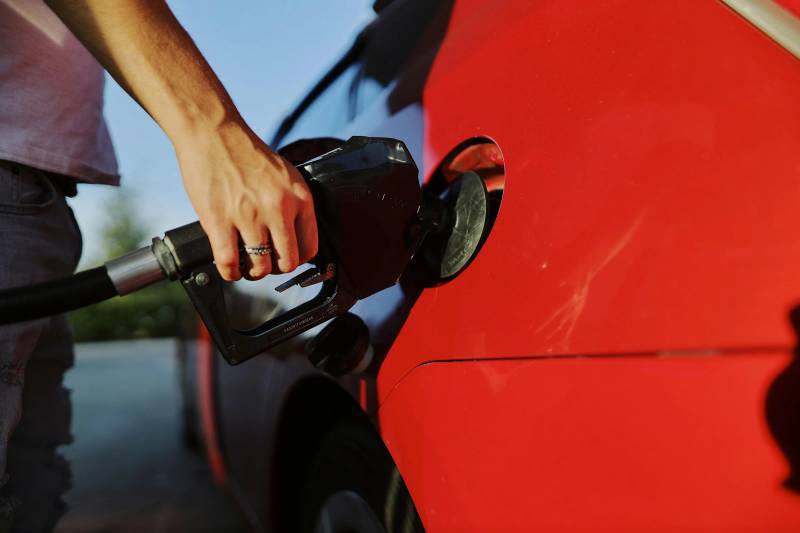
Special Cases: E85, LPG, CNG and AdBlue
E85 – flex-fuel ethanol
E85 contains up to 85% ethanol and is available primarily in France, where it is significantly cheaper than standard unleaded – often 40 – 50% less per litre. However, only dedicated flex-fuel vehicles (FFVs) or cars with approved aftermarket conversion kits can use it. Filling a standard petrol car with E85 will cause running problems, potential engine damage and increased wear on fuel system components. France has the densest E85 network in Europe, with availability at many supermarket stations.
LPG / GPL
Liquefied petroleum gas is a popular alternative in Italy (where GPL stations are widespread), France (GPLc) and Portugal (GPL Auto). Your car needs a dedicated LPG system – either factory-fitted or professionally aftermarket-installed. LPG vehicles typically have a separate filler point and a diamond-shaped label.
CNG / Metano
Compressed natural gas is most established in Italy, where Metano stations serve a significant fleet of CNG-powered vehicles. Like LPG, CNG requires a dedicated tank and fuel system.
AdBlue – not a fuel
AdBlue is a urea-based fluid used by modern diesel vehicles with SCR (selective catalytic reduction) exhaust systems to reduce nitrogen oxide emissions. It goes in a separate, smaller tank – never in the main fuel tank. Putting AdBlue into the diesel tank causes severe damage to the injection system and can destroy the engine. The AdBlue filler cap is typically blue and much smaller than the main fuel cap.
Planning a Cross-Border Trip? Compare Fuel Prices Before You Go
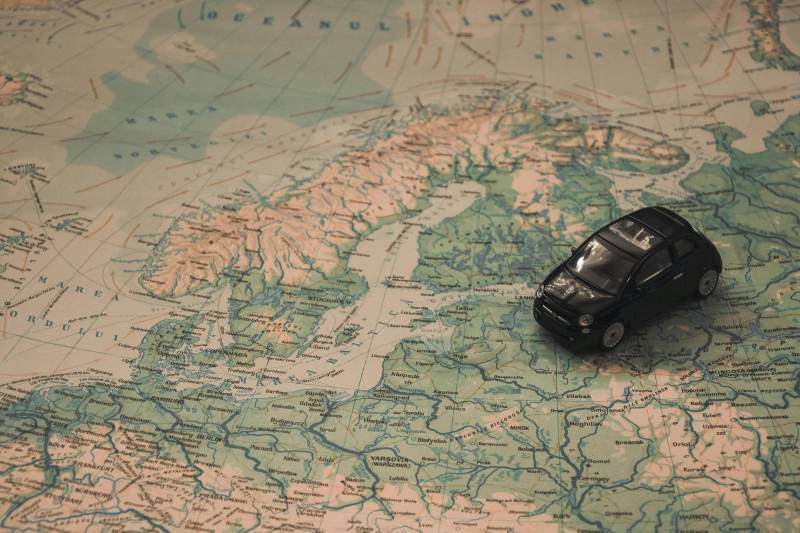
If you are driving from Paris to Barcelona, or from London through France to Milan, knowing which fuel to look for at each border crossing and what it costs can save you real money. Fuelconomy tracks prices across all six markets – check the live widgets below for current averages in Spain and Italy.
| Fuel | Min | Avg | Max |
|---|---|---|---|
| Gasolina 95 E5 | €1.499 | €1.811 | €2.024 |
| Gasóleo A | €1.659 | €1.910 | €2.199 |
| Gases Licuados del Petróleo | €0.781 | €1.099 | €1.290 |
| Fuel | Min | Avg | Max |
|---|---|---|---|
| Benzina | €1.634 | €2.055 | €2.300 |
| Gasolio | €1.605 | €2.250 | €2.462 |
| GPL | €0.554 | €0.760 | €0.916 |
Based on Fuelconomy data, among the countries we track, Spain consistently offers some of the lowest pump prices for both petrol and diesel, while Italy and Germany tend to sit higher. A driver filling a 50L tank could see savings in the range of €5 – €15 per fill-up by timing purchases at the right side of a border, based on typical price differentials in our data.
FAQ
What do the circles, squares and diamonds on European fuel pumps mean?
Circles indicate petrol (gasoline), squares indicate diesel and diamonds indicate gaseous fuels like LPG, CNG or hydrogen. Inside each shape, a code specifies the exact grade – E5, E10, B7, XTL, and so on. This labelling system has been mandatory across the EU since October 2018 under the EN 16942 standard.
Is E10 petrol safe for my car?
Almost certainly, if your car was built after 2011. Between 2000 and 2010, compatibility varies by manufacturer – check the ACEA compatibility list or your vehicle handbook. Cars built before 2000 and classic vehicles should use E5 petrol, which is still available at most stations as the premium or super unleaded option.
What is XTL and can I put it in my diesel car?
XTL is paraffinic diesel made from renewable sources – most commonly HVO (hydrotreated vegetable oil) produced from waste cooking oils. If your fuel filler cap carries a square XTL label alongside B7, your car is approved for it. XTL can be mixed with standard B7 diesel in any ratio. It has a higher cetane number than fossil diesel, which means cleaner combustion and better cold-start performance.
What happens if I put petrol in a diesel car?
Do not start the engine. Petrol strips the lubricant properties from diesel fuel, causing rapid wear on the high-pressure fuel pump and injectors. If caught before starting, a professional drain costs roughly €150 – €300. If driven, repairs can run to €2,000 – €9,000 or more.
Why is the same fuel called different things in different countries?
Each country retained its traditional fuel names (Gazole, Gasolio, Gasóleo A, B7) alongside the EU label codes. The standardised circle/square/diamond shapes were introduced precisely because the names varied so much. At the pump, you will typically see both the old marketing name and the new EU shape label.
Does higher octane petrol (98 vs 95) give better fuel economy?
Only if your engine is specifically tuned for it. Most standard cars are designed for 95 RON – using 98 RON offers no measurable benefit in performance or economy. Sports cars, turbocharged engines and vehicles whose manual specifies "premium required" will benefit from the higher octane rating. If your manual says "95 RON recommended," save the money.
How do I find the cheapest fuel near me when driving in Europe?
Fuelconomy aggregates live prices from official government data feeds across France, Spain, Italy, Portugal, the United Kingdom and Germany. Search by city or station to compare prices before filling up – even small differences compound to meaningful annual savings.
Is AdBlue a type of fuel?
No. AdBlue is a urea-based exhaust fluid for modern diesel vehicles with SCR systems. It reduces nitrogen oxide emissions. It has its own separate, smaller filler cap (usually blue). Putting AdBlue into the diesel tank causes severe and expensive damage.
The Bottom Line
The EU fuel labelling system is straightforward once you know the three shapes: circles for petrol, squares for diesel, diamonds for gas. Match the label on the pump to the label on your filler cap, and you cannot go wrong – even in a country where you do not speak the language. For older vehicles without the new stickers, the owner's manual remains the definitive reference.
Compare live fuel prices across 6,789 French stations, 11,198 Spanish stations and thousands more on Fuelconomy – and find the cheapest station near you before your next fill-up. (Updated: March 2026)
Sources: